Rings, bands and recovery
RingConn Gen 3
The strongest three-year cost position of any smart ring we rank, attached to the weakest evidence position. Those two facts are the whole review.
We earn a commission when you buy through our Amazon links, at no extra cost to you. It never decides a ranking — the rubric that does is published in full, so you can check us rather than take our word for it. How this works.
The short answer
A titanium ring that states up to 14 days of battery, ships with a charging case and charges no subscription of any kind, which gives it the lowest three-year cost of any ring on this site. It also has no independent validation of any kind that we could find — not of its sleep staging, not of its heart rate, not of the apnea or vascular features it advertises.
Ranked
Quick picks
| # | Device | Best for | Evidence | Score | Price |
|---|---|---|---|---|---|
| 01 | 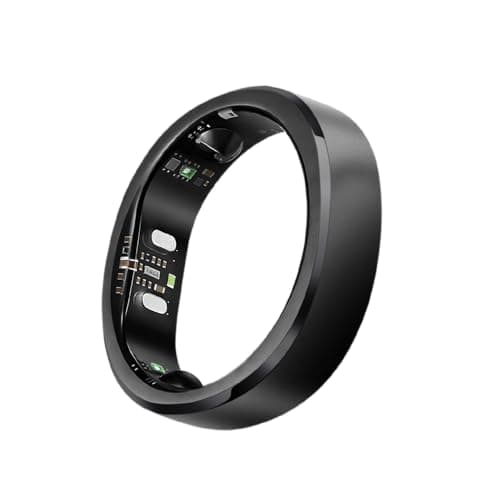 RingConn Gen 3 A fortnight of stated battery with no fee of any kind — and not one published measurement of anything it reports. | Wearing it and forgetting about it | No validation study exists | 6.9/10 | $349.00Amazon |
#ad· Live prices from the Amazon Product API, as of Oct 4, 2026. Where we have no verified live price we show none. Scores come from the published rubric at How we rank — the Evidence column shows what each ranking actually rests on, including where the answer is nothing.
What RingConn publishes
From RingConn's own product page: $349, sizes 6 to 15, titanium and epoxy resin, 2.3 mm thick at 2.5-3.5 g, battery up to 14 days, a universal wireless charging case, 10 days of offline data storage, vibration alerts, vascular health insights, sleep apnea pattern insights and women's full-cycle predictions. The page states plainly: no subscription required.
Two things RingConn does not publish on that page, in any form we could read: a water-resistance rating, and a sensor list. Neither appears anywhere on this site as a result. We are not going to describe hardware the maker declines to describe.
The cost position, which is the genuine argument for it
A smart ring's sticker price is rarely its price. The category norm is a membership fee that unlocks the data the hardware already collected, and over three years that fee usually exceeds the ring. RingConn charges nothing, and there are no paid app modules either — apnea pattern insights and vascular insights are included rather than sold as upgrades.
That is why it scores 6.9 overall despite the worst evidence score we award. Cost per capability carries 15% of our rubric and endurance another 15%, and this ring takes close to full marks on both. The arithmetic is worked through properly on our subscription-free sleep tracker ranking, and against a subscription ring the three-year gap is not close.
The evidence position, which is the argument against it
There is no published validation of the RingConn Gen 3. There is none of the Gen 2 either. RingConn has not published a validation of its own, and no independent group has measured one that we could find.
That matters more in this category than in most. A running watch's headline output is a distance you can sanity-check against a known route. A sleep ring's headline output is a four-stage hypnogram — light, deep, REM, awake — and you have no way whatsoever to check it, because you were asleep. The only check available is somebody running the device against polysomnography and publishing what happened. For this ring, nobody has.
For scale, the devices that have been measured did not do brilliantly either. Our sleep accuracy page collects every published figure we could read, and the pattern across the literature is that consumer wearables detect sleep-versus-wake reasonably and stage it poorly. An unmeasured device is not necessarily worse than those. It is simply unknown, and we rank it as unknown rather than guessing in either direction.
The apnea and vascular features, read carefully
RingConn advertises sleep apnea pattern insights and vascular health insights. The same page carries RingConn's own disclaimer that the product “is not a medical device and is not intended to diagnose, treat, cure, or prevent any disease or medical condition”.
Both statements are true at once, and the second is the one to act on. Apnea is a diagnosable condition with a real clinical pathway, and a ring producing a pattern insight is not a step on it. If a device suggests you have disordered breathing at night, the correct response is a referral, not a firmware update. We would say the same about every consumer device advertising the feature; RingConn is simply the one in front of us.
Living with it
Two practical notes that are not about data. Ring sizing is per size andthe Amazon listing is per size, so ordering the wrong one is a return rather than a strap adjustment — RingConn sells sizes 6 to 15 and a sizing kit is the normal first step. And 2.3 mm at 2.5-3.5 g is genuinely thin; the practical argument for a ring over a watch has always been that you will actually wear it to bed, and this is among the least intrusive we rank.
Ten days of offline storage is a quietly useful specification too. A ring that keeps recording when your phone is elsewhere is a ring that does not develop gaps in its own history, which matters if you care about trends rather than single nights.
Who it beats, and who beats it
- Beats every subscription ring on three-year cost, decisively. No fee, no paid modules, and a charging case in the box.
- Beats the Gen 2 on hardware and endurance while sharing its exact evidence position, which is none. It scores 6.9 against the Gen 2's 6.6.
- Loses to the Oura Ring 4 on evidence, by the entire width of the category. Oura's current generation is the one device here with a published nocturnal HRV result against an ECG reference. That is why it outranks this ring despite costing more to own.
- Loses to a chest strap for anything you train on. Rings are for sleep and recovery trends. If the question is heart rate during exercise, the answer is not a ring.
Availability, honestly
When we checked on 4 October 2026, RingConn's own store showed the Gen 3 out of stock while the Amazon listing we link carried a live price the same day. Direct stock in this category moves around, and our buy link follows the listing that actually had an offer. The price shown here is the one our price pipeline verified on the date stamped beside it, and if that number disappears it is because we would rather show nothing than something stale.
In full
Every pick, and why
RingConn Gen 3
A fortnight of stated battery with no fee of any kind — and not one published measurement of anything it reports.
- Form
- Ring, titanium and epoxy resin
- Size and weight
- 2.3 mm thick, 2.5-3.5 g, manufacturer-stated
- Battery
- Up to 14 days, manufacturer-stated, plus a wireless charging case
- Sizing
- Sizes 6-15 — the ASIN is per size
- Subscription
- None
- Extras
- Sleep apnea pattern insights, vascular health insights, 10 days offline storage
What's good
- Manufacturer-stated battery of up to 14 days, plus a charging case, with no fee attached to any of it
- No subscription and no paid app modules, so the sticker price is the whole three-year price
- Apnea pattern and vascular insights are included rather than sold separately
What isn't
- No independent validation of any kind that we could find — the same gap the Gen 2 has
- RingConn publishes no water-resistance rating and no sensor list we could read, so this site quotes neither
- RingConn's own page states the product is not a medical device, which is worth reading next to the apnea and vascular features
Skip this if
Skip this if you want a number somebody has checked. It is the cheapest ring to own over three years and the most comfortable to live with, and every figure it shows you is unaudited.
What the evidence says
No validation study existsNo independent validation study exists for this device that we could find, and none exists for the Gen 2 either. RingConn has not published a validation of its own. In a category whose headline output is a four-stage sleep graph you cannot check yourself, that absence is the most important thing about the product.
Show how this 6.9 was calculated
| Factor | Weight | Score |
|---|---|---|
| EvidenceNothing published by anyone, including RingConn itself. Same position as the Gen 2. | 30% | 2.5 |
| HardwareRingConn's current generation, per the manufacturer's own specification: 2.3 mm and 2.5-3.5 g in titanium and epoxy resin. | 20% | 8.0 |
| Metric coverageSleep, apnea patterns, vascular trends, cycle and activity, with no feature paywall anywhere. | 20% | 8.5 |
| EnduranceUp to 14 manufacturer-stated days plus a charging case, second only to the Ultrahuman Ring PRO's stated 15 among rings on this site. | 15% | 9.5 |
| Cost per capabilityNo subscription and no paid modules. Over three years that is the strongest cost position in the category. | 15% | 9.5 |
Price as of Oct 4, 2026. Prices move; Amazon's is the one that counts.
#ad · we may earn a commission from this link to RingConn Gen 3
Questions
Frequently asked
Does the RingConn Gen 3 need a subscription?
No. RingConn's own page states no subscription is required, and there are no paid app modules either — the apnea pattern and vascular insights are included. That is the central reason to consider it, because in this category the fee usually costs more over three years than the hardware did.
How accurate is the RingConn Gen 3?
Nobody knows, and we will not pretend otherwise. No independent validation of this ring or of the Gen 2 exists that we could find, and RingConn has published none of its own. It is the only honest answer available, and it is why the ring takes our lowest evidence score despite scoring well everywhere else.
RingConn Gen 3 or Oura Ring 4?
The Oura Ring 4 if you want a device somebody has measured — it is the one ring here with a published nocturnal HRV result against an ECG reference. The RingConn if you want the lowest three-year cost and are comfortable that its numbers are unaudited. Our full comparison works the money and the evidence through side by side.
Can the RingConn Gen 3 detect sleep apnea?
It advertises sleep apnea pattern insights, and RingConn's own page states the product is not a medical device and is not intended to diagnose any condition. Treat a flag from it as a prompt to speak to a doctor, never as a result. No published study has measured how well it does this.
Is the RingConn Gen 3 waterproof?
RingConn does not publish a water-resistance rating on its product page in any form we could read, so we do not quote one. That is a genuine gap in the manufacturer's own documentation rather than a claim we are declining to repeat, and it is worth asking RingConn directly before swimming in it.
Show your working
Sources
Every one of these was read in full before it was cited. Where we could not access a paper, we do not quote its numbers.
- [1]Manufacturer specification2026RingConn — Gen 3 published specifications
Manufacturer-stated, read 2026-09-06: from $349, sizes 6–15, titanium and epoxy resin, 2.3 mm thick at 2.5–3.5 g, battery “up to 14 days”, a universal wireless charging case, 10 days of offline data storage, vibration alerts, vascular health insights, sleep apnea pattern insights, and “No Subscription Required”. RingConn does not publish a water-resistance rating or a sensor list on that page in a form we could read, so neither appears anywhere on this site. The page also carries RingConn’s own disclaimer that the product “is not a medical device”.
- [2]Peer-reviewed validation2024Robbins et al., “Accuracy of Three Commercial Wearable Devices for Sleep Tracking in Healthy Adults”, Sensors 24(20):6532
Brigham and Women’s Hospital. n = 35 healthy adults, single-night inpatient polysomnography, testing Oura Ring Gen3, Fitbit Sense 2 and Apple Watch Series 8. Authors’ stated limits: one night, lab conditions, healthy adults without insomnia, comparison only during scheduled sleep, and device failures on 6 Apple Watches and 2 Fitbits.
- [3]Peer-reviewed validation2025Dial, Hollander, Vatne, Emerson, Edwards & Hagen, “Validation of nocturnal resting heart rate and heart rate variability in consumer wearables”, Physiological Reports 13(16):e70527
DOI 10.14814/phy2.70527. n = 13 healthy adults (7 male, 6 female, 33.2 ± 8.6 years) across 536 nights, each wearing an Oura Gen 3, Oura Gen 4, Polar Grit X Pro, Garmin fēnix 6 and Whoop 4.0 simultaneously against a Polar H10 single-lead ECG reference sampled at 1000 Hz. Authors’ stated limits: healthy adults only, no atrial-fibrillation population, proprietary and periodically-updated algorithms, and unequal night counts per device. The Garmin was dropped from the resting-heart-rate comparison because the 30-minute window it uses is not timestamped.
Read next
Related
- RingConn Gen 2 review
The previous generation, same evidence position, lower price.
- Oura vs RingConn
Measured against unmeasured, with the three-year money worked out.
- Best subscription-free sleep trackers
Where this ring's cost argument gets ranked against the field.
- Best smart rings
The full ring ranking, evidence column included.
- Sleep tracking accuracy by device
Every published figure we could read, and every device with none.