GPS and multisport
The best GPS watches for cycling
A ride punishes a watch in ways a run does not: longer hours in the satellite mode, a bar-mounted screen you glance at, and a wrist that is clamped to a handlebar for four hours. Here is what the published figures say, including when a bike computer is the better buy.
We earn a commission when you buy through our Amazon links, at no extra cost to you. It never decides a ranking — the rubric that does is published in full, so you can check us rather than take our word for it. How this works.
Top pick
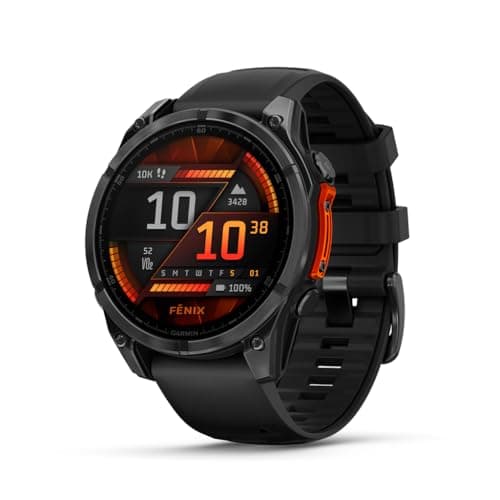
Expedition and rough-terrain useGarmin fēnix 8 (47mm)
Everything Garmin makes, in a case built to survive being hit. You pay for the durability, not for better data.
$999.9925% off
Price as of November 21, 2026. Prices move; Amazon's is the one that counts.
#ad · we may earn a commission from this link to Garmin fēnix 8 (47mm)
The short answer
The Garmin fenix 8 is the pick for cycling: 35 stated hours in all-satellite plus multi-band mode, built-in maps and the deepest sensor-pairing support here. The budget pick is the COROS PACE 4 at under $500 today, which states more satellite hours than the fenix at a third of the price. Read the last section before you buy any of them: on a bike, a handlebar computer beats a wrist watch at the one job that matters most.
Ranked
Quick picks
| # | Device | Best for | Evidence | Score | Price |
|---|---|---|---|---|---|
| 01 | Garmin fēnix 8 (47mm) Everything Garmin makes, in a case built to survive being hit. You pay for the durability, not for better data. | Expedition and rough-terrain use | Manufacturer specification | 7.5/10 | $745.99Amazon |
| 02 | 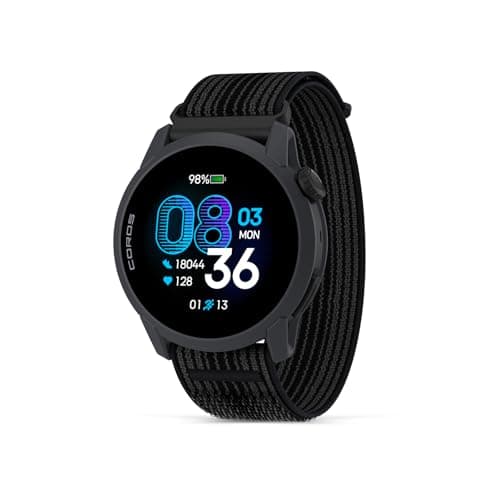 COROS PACE 4 41 stated GPS hours in a 32-gram watch, for a third of the Forerunner 970's money. The endurance-per-dollar winner by a distance. | Long days on a budget | Independent measured test | 7.5/10 | $249.00Amazon |
| 03 | No image COROS APEX 4 (46mm) 41 days of daily battery and a MIP screen you can read in direct sun. The anti-AMOLED choice. | Multi-day efforts | Manufacturer specification | 7.3/10 | Check price → |
| 04 | 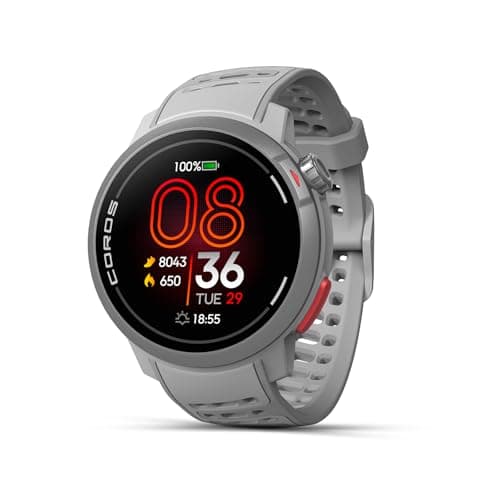 COROS PACE Pro The cheapest route to global maps with turn-by-turn navigation on a wrist, and the only watch in the PACE line whose dual-frequency battery figure COROS is willing to publish. | Navigation on a PACE budget | No validation study exists | 6.9/10 | $299.00Amazon |
#ad· Live prices from the Amazon Product API, as of November 21, 2026. Where we have no verified live price we show none. Scores come from the published rubric at How we rank — the Evidence column shows what each ranking actually rests on, including where the answer is nothing.
Three specifications decide whether a watch survives a ride
A long ride is a longer continuous recording than almost any run, taken at a speed where positioning error compounds, with your forearm locked in one position for hours. That changes which numbers matter.
One: stated hours in the accurate satellite mode, not the flattering one. Garmin publishes both for the fenix 8 - 47 hours GPS-only and 35 hours all-satellite plus multi-band at 47 mm - and this site always ranks on the second figure, because the first is the mode you would not choose for a ride through a river valley or a city. COROS, by contrast, publishes dual-frequency figures for the PACE Pro only (31 hours) and All-Systems figures for the PACE 4 (41 hours) and nothing for the APEX 4, which is why those three numbers are not a like-for-like row.
Two: whether the watch will read an external sensor. This is the cycling-specific one, and it is where published manuals beat marketing. Garmin documents ANT+ and Bluetooth sensor pairing explicitly - the Venu 4 manual and the vivoactive 6 manual both name the protocol and the straps, and the fenix 8 sits above both in the same family. A watch that pairs a power meter, a speed sensor and a chest electrode is a watch whose numbers do not depend on its own wrist sensor.
Three: navigation. Riding takes you further from home than running does, and the watches here split cleanly: the fenix 8 and the PACE Pro carry maps with turn-by-turn navigation, the PACE 4 and the APEX 4 do not. If you ride unfamiliar routes, that is not a feature, it is the requirement.
Why the fenix 8 wins on a bike specifically
The fenix 8is not the longest-lasting watch here on paper, and it is by far the most expensive. It wins on the combination: 35 stated hours in the mode you would actually ride in, full-color built-in maps, a dive-rated case that shrugs off weather, and Garmin's sensor ecosystem, which is the deepest in the category. For a long ride that combination has no substitute on this list.
Two honest caveats. It costs under $1000 today, and the gap to the budget pick is $497 - which is a lot of money for maps and materials. And the wrist optical sensor is the same class of hardware as every other watch here: no current wrist sensor at any price has a favorable independent validation that we could find, and the 2024 umbrella review found only about 34 of 310 identified consumer wearables had ever been validated at all. The full review is at Garmin fenix 8.
The budget pick: the PACE 4 states more hours than the flagship
The COROS PACE 4 states 41 All-Systems GPS hours and 19 days of daily use in a 32-gram case, per COROS, and at $6.07 per stated GPS hour it is the strongest endurance-per-dollar figure on this site. For a rider who already owns a bike computer and wants the watch to handle the rest of the week, this is the obvious buy.
What it gives up is navigation and the ecosystem. It has no maps, and COROS's third-party integration depth is genuinely thinner than Garmin's - check your coaching platform before you commit. The only independent test of a COROS optical sensor, the5krunner's PACE 3 comparison, found divergence during and after rapid intensity change, which on a bike means intervals and climbs. COROS states a redesigned sensor on the PACE 4; nobody has measured it.
The APEX 4 and the PACE Pro, and who each is for
The COROS APEX 4states 41 days of daily use behind a 1.3" memory-in-pixel display, which is the right screen for a bar-mounted glance in full sun - MIP gets more readable in bright light where AMOLED gets worse. Our price layer currently returns no verified live offer for it, so its row shows a price check rather than a number, and it is deliberately not the top pick for that reason.
The COROS PACE Pro is the cheapest watch here with global maps and turn-by-turn navigation. COROS states 38 GPS hours, 31 hours with dual-frequency GPS, 20 days of daily use and a 1.3" always-on AMOLED at 1500 nits. It ranks last on our rubric because it has no evidence of its own and loses to the PACE 4 on weight and stated hours - but if you want navigation and cannot spend fenix money, it is the answer. Full write-up: COROS PACE Pro.
The recommendation that costs us money: buy a bike computer instead
We do not sell bike computers and we are going to say this anyway. On a bike, the single biggest data problem is not the GPS chip - it is that your heart-rate signal comes from a wrist clamped to a handlebar, and that you are reading a 1.3-inch screen on your forearm instead of a larger one in your eyeline. A bar-mounted computer fixes the second problem outright, and a chest strap fixes the first for about a hundred dollars.
The evidence on that first point is specific. The 2025 anatomical-placement study put three identical sensors on one person at wrist, forearm and upper arm against a Polar H10 reference across rest, a cycling warm-up, burpees and a treadmill protocol - and found that position, not brand, was the biggest variable, with the wrist the weakest site. Every watch on this page pairs a strap. If you ride by heart rate or power, the strap is the purchase that changes your data, and the watch is the purchase that displays it. The field is at best heart rate monitors for cycling.
In full
Every pick, and why
Garmin fēnix 8 (47mm)
Everything Garmin makes, in a case built to survive being hit. You pay for the durability, not for better data.
- Case
- 47mm, AMOLED
- Satellite
- Multi-band GNSS
- Extras
- Built-in maps, dive-rated, speaker and microphone
What's good
- The most durable case Garmin puts a multi-band receiver into
- Maps, dive modes and the full metric set in one device
What isn't
- Records essentially the same physiological data as a Forerunner costing a third as much
- Heavy compared with a dedicated running watch
Skip this if
Skip this if you run on roads and pavements. You would be buying a case specification you will never test, and the numbers it records are the ones a Forerunner already gives you.
What the evidence says
Manufacturer specificationPublished specifications only; no independent validation of this model that we could find.
Show how this 7.5 was calculated
| Factor | Weight | Score |
|---|---|---|
| EvidenceDetailed published specs, no independent measured validation. | 30% | 5.5 |
| HardwareMulti-band GNSS in Garmin's most ruggedized current case. | 20% | 9.5 |
| Metric coverageThe widest metric and mode coverage of any device on this site. | 20% | 10.0 |
| EnduranceAmong the longest stated GPS endurance in Garmin's AMOLED line. | 15% | 8.5 |
| Cost per capabilityBy some distance the weakest cost-per-capability figure here — the premium buys the case, not the data. | 15% | 4.5 |
$999.9925% off
Price as of November 21, 2026. Prices move; Amazon's is the one that counts.
#ad · we may earn a commission from this link to Garmin fēnix 8 (47mm)
COROS PACE 4
41 stated GPS hours in a 32-gram watch, for a third of the Forerunner 970's money. The endurance-per-dollar winner by a distance.
- Display
- 1.2" AMOLED touchscreen
- Weight
- 32 g with nylon band, 40 g with silicone
- Satellite
- All-Systems and Dual-Frequency modes
- Battery (stated)
- 19 days daily use / 41 h GPS (All-Systems)
- Thickness
- 11.8 mm
What's good
- 41 manufacturer-stated GPS hours — more than the Forerunner 970 and the 570 combined
- 32 g is light enough that you stop noticing it, which matters more over 100 miles than any feature
- Dual-frequency positioning at an entry-level price
What isn't
- COROS wrist heart rate is the one area where an independent test has published a specific problem — see the evidence note
- Smaller third-party app ecosystem than Garmin's
Skip this if
Skip this if you train by heart rate off the wrist and will not wear a strap. The one independent test we found flagged COROS wrist HR during exactly the intervals you would be buying it for.
What the evidence says
Independent measured testThe5krunner's measured comparison found the previous-generation PACE 3's wrist heart rate diverged during and after rapid intensity changes. That test was of the PACE 3, not the PACE 4, and the author cautions the dataset was limited. COROS states the PACE 4 has a redesigned sensor; no independent test of the new sensor has been published that we could find.
Show how this 7.5 was calculated
| Factor | Weight | Score |
|---|---|---|
| EvidenceThe only independent measured evidence in the range is a limited-dataset test of the PREVIOUS model, and it was unfavorable. The redesigned sensor is unvalidated. | 30% | 4.5 |
| HardwareDual-frequency GNSS and a redesigned optical sensor, per the COROS spec page. | 20% | 8.0 |
| Metric coverageStrong training metrics; a narrower ecosystem than Garmin for third-party integrations. | 20% | 7.5 |
| Endurance41 stated GPS hours in All-Systems mode is the best in this roundup by a wide margin. | 15% | 10.0 |
| Cost per capabilityComfortably the strongest dollars-per-GPS-hour figure on the site. | 15% | 10.0 |
Price as of November 21, 2026. Prices move; Amazon's is the one that counts.
#ad · we may earn a commission from this link to COROS PACE 4
COROS APEX 4 (46mm)
41 days of daily battery and a MIP screen you can read in direct sun. The anti-AMOLED choice.
- Display
- 1.3" MIP (memory-in-pixel)
- Battery (stated)
- 41 days daily use
- Case
- 46mm
What's good
- MIP displays get MORE readable in bright sun, where AMOLED gets worse
- 41 stated days of daily use removes charging from the routine entirely
What isn't
- MIP looks dull indoors next to an AMOLED — this is a genuine aesthetic trade, not just a spec
- Same unvalidated-COROS-optical-sensor caveat as the PACE 4
Skip this if
Skip this if you mostly train indoors or at night. You would be taking the dull screen and giving up nothing for it.
What the evidence says
Manufacturer specificationPublished specifications only. The one independent COROS heart-rate test we found was of the PACE 3 and does not describe this device.
Show how this 7.3 was calculated
| Factor | Weight | Score |
|---|---|---|
| EvidenceNo validation of this model; the only independent COROS test on record is of a different watch and was unfavorable. | 30% | 4.5 |
| HardwareDual-frequency GNSS behind a MIP display. | 20% | 8.0 |
| Metric coverageFull COROS training platform. | 20% | 8.0 |
| Endurance41 stated days of daily use is the longest on this site. | 15% | 10.0 |
| Cost per capabilityStrong battery-per-dollar; mid-range sticker. | 15% | 8.5 |
We don't have a verified live price for this right now, so we aren't showing one.
#ad · we may earn a commission from this link to COROS APEX 4 (46mm)
COROS PACE Pro
The cheapest route to global maps with turn-by-turn navigation on a wrist, and the only watch in the PACE line whose dual-frequency battery figure COROS is willing to publish.
- Display
- 1.3" always-on AMOLED touchscreen, 1500 nits
- Weight
- 37 g with the nylon band
- Satellite
- All-Systems and Dual-Frequency modes
- Battery (stated)
- 20 days daily use / 38 h GPS / 31 h dual-frequency
- Navigation
- Global maps with turn-by-turn navigation
- Processor
- Ambiq Apollo510
What's good
- The only device in the PACE line for which COROS publishes a dual-frequency battery figure — 31 hours — instead of leaving the accurate mode uncosted
- Global maps with turn-by-turn navigation, which the PACE 4 does not claim at any price
- A 1500-nit always-on AMOLED, which is the brightest screen COROS publishes a figure for in this range
What isn't
- No independent validation of its heart rate or positioning exists that we could find, and its optical sensor predates the redesigned one COROS describes on the PACE 4
- Heavier and shorter-lived than the cheaper PACE 4 on every stated number except daily use
Skip this if
Skip this if you never navigate. Strip the maps out of the decision and the PACE 4 is lighter, cheaper and longer-lived, and you are paying a premium for a screen and a menu you will not open.
What the evidence says
No validation study existsNo independent measurement of this watch exists that we could find as of August 2026. The only measured COROS heart-rate result on record is the5krunner's limited-dataset comparison of the PACE 3, which found divergence during and after rapid intensity change. That test was of a different watch, so it is not evidence about this one either way — which is the point: there is nothing here to weigh.
Show how this 6.9 was calculated
| Factor | Weight | Score |
|---|---|---|
| EvidenceNothing published measures this watch. The only COROS result on record tested the PACE 3, so this device is ranked on specification alone — which is exactly what caps it. | 30% | 4.5 |
| HardwareAll-Systems and Dual-Frequency satellite modes and an Ambiq Apollo510 processor, per COROS. Its optical sensor predates the redesigned one COROS describes on the PACE 4. | 20% | 7.5 |
| Metric coverageFull COROS training platform plus SpO2, and global maps with turn-by-turn navigation the PACE 4 does not claim. Same narrower third-party ecosystem as the rest of the range. | 20% | 8.0 |
| EnduranceCOROS states 31 hours in dual-frequency mode, 38 hours of GPS activity tracking and 20 days of daily use. We carry the dual-frequency number, because that is the mode the positioning hardware was bought for. | 15% | 9.0 |
| Cost per capabilityMid-range sticker for dual-frequency plus maps. Per dual-frequency GPS hour it sits behind both the PACE 4 and the PACE 3 — that gap is what the maps cost. | 15% | 7.5 |
Price as of November 21, 2026. Prices move; Amazon's is the one that counts.
#ad · we may earn a commission from this link to COROS PACE Pro
What to check before you buy a cycling watch
- Match stated hours to your longest ride, in the accurate mode. A GPS-only figure and an all-systems multi-band figure on the same watch can differ by a third or more. Only one of them describes the mode you want for a ride.
- Confirm the sensors you own will pair. Power meters and speed or cadence sensors are commonly ANT+. Garmin documents ANT+ and Bluetooth pairing in its manuals by name; check before you assume.
- Decide about maps before you decide about screens. Only two watches here navigate. If you ride new routes, that cuts the list in half immediately.
- Screen technology matters more on a bike. You glance rather than look. MIP and transflective panels get more readable in direct sun; AMOLED gets less.
- Spend the last hundred dollars on a strap, not on the watch tier. The published record favors a chest electrode over every wrist sensor on this page, and a cheaper watch plus a strap measures better than a dearer watch alone.
How this ranking was built
Every score on this page comes from one published rubric, applied identically to every device on the site, with the weights written down and the inputs shown. We have not worn any of these devices and we never say we have. Read the method and check us.
Questions
Frequently asked
Can a running watch record a bike ride properly?
Yes - every watch here has cycling activity profiles and pairs external cycling sensors. The limits are physical rather than software: a wrist on a handlebar is the worst site for an optical heart-rate reading, and a watch screen is smaller and worse placed than a bar-mounted computer.
Which watch here has the longest battery for a long ride?
On manufacturer-stated activity figures, the COROS PACE 4 at 41 All-Systems hours, ahead of the PACE Pro at 38 hours of GPS activity tracking and the fenix 8 at 35 hours in all-satellite plus multi-band. Note those are three different satellite modes, so they are not strictly comparable.
Do I need multi-band GPS for cycling?
It helps most where positioning is hardest - city riding between tall buildings, deep valleys, tree cover. What nobody has published is a modern study measuring how much it helps; the only trundle-wheel validation on record predates dual-frequency hardware entirely. More on dual-band GPS.
Will these watches work with a power meter?
Garmin and COROS watches pair ANT+ and Bluetooth sensors, and Garmin names the protocols and procedure in its own owner's manuals. Confirm your specific power meter against the watch's sensor list before buying - this is the one compatibility question worth checking twice.
Show your working
Sources
Every one of these was read in full before it was cited. Where we could not access a paper, we do not quote its numbers.
- [1]Manufacturer specification2026Garmin — fēnix 8 Series owner’s manual, battery information
Manufacturer-stated, read 2026-08-18. One table covers the fēnix 8 and the fēnix 8 Pro, which is why the two can be compared here without mixing sources. fēnix 8 AMOLED 47 mm: 16 days smartwatch with Gesture (7 with Always On Display), 47 h GPS-only (37 AOD), 35 h all satellite systems plus multi-band (28 AOD). fēnix 8 Pro 47 mm: 15 days (8 AOD), 44 h GPS-only (33 AOD), 30 h all systems plus multi-band (23 AOD). fēnix 8 Pro 51 mm: 27 days (15 AOD), 78 h GPS-only (56 AOD), 53 h all systems plus multi-band (41 AOD), and 21 h all systems plus multi-band with LTE LiveTrack (19 AOD).
- [2]Manufacturer specification2026COROS — PACE 4 published specifications
Manufacturer-stated: 1.2" AMOLED, 32 g with nylon band, 11.8 mm thick, All-Systems and Dual-Frequency satellite modes, 41 GPS hours, 19 days of daily training and sleep.
- [3]Manufacturer specification2026COROS — PACE Pro published specifications
Manufacturer-stated: 1.3" always-on AMOLED touchscreen at 1500 nits, 37 g with the nylon band, All-Systems and Dual-Frequency satellite modes, 38 hours of GPS activity tracking, 31 hours with dual-frequency GPS, 20 days of daily use and sleep tracking, 6 days with the always-on display, global maps with turn-by-turn navigation, an Ambiq Apollo510 processor and an optical heart-rate plus SpO2 sensor. COROS's own launch release dates the watch to 31 October 2024 at $349.
- [4]Manufacturer specification2026Garmin — Venu 4 Series owner’s manual, “Wireless Sensors”
Manufacturer-stated, read 2026-10-11. Garmin states that “your watch can be paired and used with wireless sensors using ANT+ or Bluetooth technology”, and lists the supported sensor types: Club Sensors (Approach CT10), eBike, Extended Display, Heart Rate (HRM 200, HRM 600, HRM-Fit and the HRM-Pro series are named), Foot Pod, Headphones, inReach, Lights, Power (Rally or Vector pedals), Radar, RD Pod, Shifting, Shimano Di2, Smart Trainer, Speed/Cadence and tempe. The US edition of this page was not reachable from here, so the Asia-Pacific edition of the same manual is cited.
- [5]Manufacturer specification2026Garmin — vívoactive 6 Owner’s Manual, “Pairing Your Wireless Sensors”
Manufacturer-documented, read 2026-11-01. The watch pairs wireless sensors “using ANT+ or Bluetooth technology” and reconnects automatically “when you start an activity and the sensor is active and within range”. The US manual names the HRM 200, HRM 600, HRM-Fit and HRM-Pro series, and advises pairing an HRM-Fit or HRM-Pro over ANT+ rather than Bluetooth when you want running pace and distance from the strap. This is the single most consequential line in the manual for anyone who cares about heart-rate data: the watch can be told to stop guessing and read a chest electrode instead.
- [6]Peer-reviewed validation2025“Impact of Anatomical Placement on the Accuracy of Wearable Heart Rate Monitors During Rest and Various Exercise Intensities”, Sensors (Basel)
n = 28 (14 male, 14 female). Polar H10 chest strap as the reference. Compared Polar Verity Sense (forearm), Garmin Forerunner 55 (wrist) and three simultaneous Whoop 4.0 units at wrist, forearm and upper arm, across rest, cycling warm-up, burpees and a modified Bruce treadmill protocol.
- [7]Manufacturer specification2026Polar — H10 heart rate sensor published specifications
Manufacturer-stated: electrical (ECG) measurement, Bluetooth LE + ANT+, internal memory for one session up to 30 hours, up to 400 h on a CR2025 coin cell, WR30.
- [8]Independent measured test2023the5krunner, measured heart-rate comparison of the COROS PACE 3
An independent measured test, not a peer-reviewed study, and the author explicitly cautions the dataset was limited. Compared against Garmin HRM-Pro Plus and Polar Verity Sense across easy runs, intervals and cycling. Found divergence during and after rapid intensity change. Tests the PACE 3, not the PACE 4.
- [9]Peer-reviewed validation2024Doherty, Baldwin, Keogh, Caulfield & Argent, “Keeping Pace with Wearables: A Living Umbrella Review of Systematic Reviews Evaluating the Accuracy of Consumer Wearable Technologies in Health Measurement”, Sports Medicine
DOI 10.1007/s40279-024-02077-2. An umbrella review: 24 systematic reviews covering 249 unique primary validation studies and 430,465 participants (43% female), across 11 biometric outcomes, with roughly 34 of 310 identified consumer wearables ever validated. Reported accuracy by metric: heart rate approximately ±3% (mean bias −3.39 bpm); step count mean absolute percentage error from −9% to 12%; energy expenditure mean bias −3 kcal per minute with error ranging from −21.27% to 14.76%. Authors’ stated limits: a temporal lag between device release and published research, the intrinsic bias of a tertiary synthesis, and heterogeneity of protocols, devices, criterion measures and statistics severe enough that the authors did not pool a meta-analysis.
Read next
Related
- Best heart rate monitors for cycling
The sensor side of the same purchase, and the cheaper half.
- Best multisport watches
When the ride is one leg of three.
- Garmin fenix 8 review
The full write-up on this page's first pick.
- Best running watches with maps
The navigation field in full, for riders who go further than they know.