Head to head
Whoop vs Oura vs Garmin
Three recovery platforms, three completely different commercial models — and, unusually, one peer-reviewed study that put all three on the same wrists and fingers on the same nights.
We earn a commission when you buy through our Amazon links, at no extra cost to you. It never decides a ranking — the rubric that does is published in full, so you can check us rather than take our word for it. How this works.
Top pick
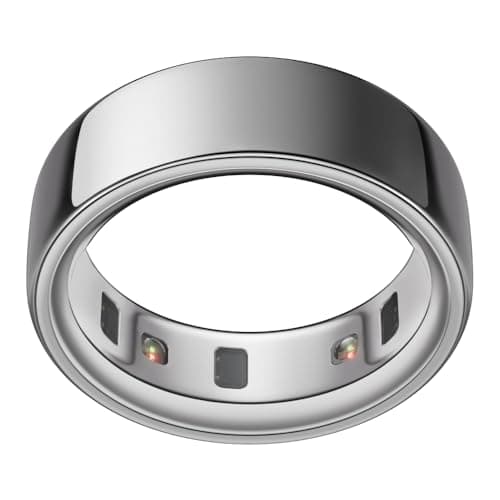
Sleep staging you can actually citeOura Ring 4
The only consumer sleep device with a strong independent PSG result behind it — 76.3% four-stage agreement, and the best deep-sleep sensitivity of the three tested.
Price as of October 10, 2026. Prices move; Amazon's is the one that counts.
#ad · we may earn a commission from this link to Oura Ring 4
The short answer
Buy the Oura Ring 4 if recovery data is the point: in a 2025 validation across 536 nights it read nocturnal HRV closest to an ECG of any device tested. Buy Whoop if you want coaching built around that data and accept renting it. Buy a Garmin if you want to own the device and train with it.
Ranked
Quick picks
| # | Device | Best for | Evidence | Score | Price |
|---|---|---|---|---|---|
| 01 | Oura Ring 4 The only consumer sleep device with a strong independent PSG result behind it — 76.3% four-stage agreement, and the best deep-sleep sensitivity of the three tested. | Sleep staging you can actually cite | Peer-reviewed validation | 8.0/10 | $349.00Amazon |
| 02 | 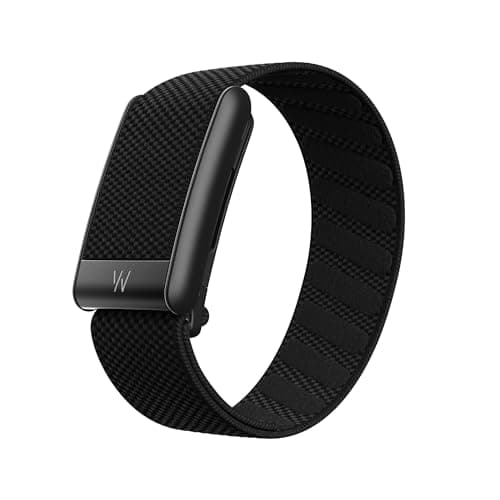 WHOOP Peak (12-month membership) Not a product you buy, a subscription you enter. Priced honestly on Amazon as what it is: twelve months. | Recovery-led training, if you accept the model | Peer-reviewed validation | 7.3/10 | $239.00Amazon |
| 03 | 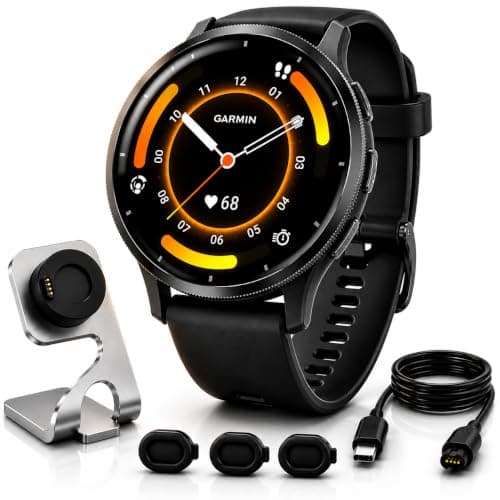 Garmin Venu 3 The sleep-and-recovery watch for people who already trust Garmin's training data. | One device for training and sleep | Manufacturer specification | 7.2/10 | $219.99Amazon |
#ad· Live prices from the Amazon Product API, as of October 10, 2026. Where we have no verified live price we show none. Scores come from the published rubric at How we rank — the Evidence column shows what each ranking actually rests on, including where the answer is nothing.
The reason this three-way has an answer
Whoop, Oura and Garmin all sell the same promise — a number in the morning telling you how recovered you are. All three build that number from overnight heart rate and heart rate variability. So the question that matters is not whose app is prettiest; it is whose HRV figure is closest to what an ECG would have recorded on the same night.
That question has been asked properly. A 2025 validation in Physiological Reports had 13 adults wear an Oura Gen 3, an Oura Gen 4, a Whoop 4.0, a Garmin fēnix 6 and a Polar Grit X Pro simultaneously across 536 nights, against a Polar H10 single-lead ECG sampled at 1000 Hz. One reference, one set of nights, five devices. Three of the brands on this page are in it.
What it found, in order
| Device measured | Nocturnal HRV agreement | Mean error |
|---|---|---|
| Oura Gen 4 | 0.99 concordance | 5.96% |
| Oura Gen 3 | 0.97 | 7.15% |
| Whoop 4.0 | 0.94 (289 nights) | 8.17% |
| Garmin fēnix 6 | 0.87 — described by the authors as poor agreement | 10.52% |
| Polar Grit X Pro | 0.82 | 16.32% |
Both rings beat every wrist device. The Whoop, worn on the wrist, landed third of five with a genuinely decent 0.94 — and 0.91 concordance with 3.00% error for resting heart rate. The Garmin was the one the authors singled out as showing poor agreement, and Garmin was dropped from the resting heart-rate comparison entirely because the 30-minute window it uses is not timestamped.
One more thing the table does not show: that study measured a fēnix 6, a Whoop 4.0 and two Oura generations, none of which is the device you would buy today. Thirteen participants is a small sample, all healthy adults, and the night counts per device were unequal. It is still the only study that has put these three brands side by side, which is why it decides this page instead of a feature grid.
Sleep stages: only one of the three has been measured
Recovery scores are built on sleep stages as well as HRV, and here the record is lopsided. Oura holds the strongest independent result in the category — 76.3% four-stage agreement against clinical polysomnography, with the best deep-sleep sensitivity of three devices tested at Brigham and Women's Hospital. Garmin's sleep staging has no independent polysomnography validation that we could find, for any model. Whoop's staging has not been published against polysomnography either; what exists for Whoop is the HRV result above and a placement finding.
That placement finding is the most actionable thing on this page. The 2025 anatomical placement study ran three Whoop 4.0 units at once on the wrist, the forearm and the upper arm: the upper arm produced the lowest error at warm-up and the best optical agreement in explosive work. Whoop is the only one of these three you can legitimately move off the wrist, and the published evidence says you should. The full tables are in HRV accuracy by device and sleep tracking accuracy by device.
Three completely different things to buy
This is where the comparison actually turns, because the devices are not the same kind of purchase.
- Oura — device plus membership.You own the ring; the app costs $5.99 a month or $69.99 a year, first month free, and Oura states that without it the insights are "much more limited". Three years, at the monthly rate: $559.
- Whoop — membership only. There is no hardware purchase; the Amazon listing is a twelve-month term, which is at least honest about what it is. Three years: $717. Stop paying and it stops working.
- Garmin — buy it and it is yours. No fee, no tier, no cancellation cliff. Three years: $220, which is simply the price.
Those three numbers are usually a long way apart, and they move the decision more than any single accuracy figure does. The cheapest option in the long run is the one with the weakest measured HRV; the best-measured option is in the middle; the most expensive is the one that evaporates if you cancel. We go through the rental question on its own in is Whoop worth it, and the brand-by-brand pairs are at Whoop vs Garmin and Oura vs Garmin.
Our recommendation, and when to ignore it
The ring wins on data quality and that is why it ranks first here. If you want the number in the morning to mean something, the finger is the best optical site of the three and the only one with both a strong HRV result and a strong staging result behind it. If you want the newest ring instead, read the Oura Ring 5 pagefirst — the newer hardware has no validation at all, and our rubric does not let a predecessor's paper transfer.
Whoop wins on what it does with the data. Nothing here coaches as aggressively, and the upper-arm option is a real measured advantage rather than a marketing one. It is also the only one of the three that can be worn where the evidence says optical sensors work best. Enter it knowing the three-year figure.
Garmin wins on everything that is not recovery. It records your training, it has no subscription, and a 14-day stated battery means it is on your wrist at bedtime rather than on a charger — which is the real-world failure of sleep tracking on sports watches. Its recovery metrics are the least validated of the three, and we would rather say that than sell you a story about Firstbeat algorithms. If your Garmin is already on your wrist, the honest answer is often to add nothing.
In full
Every pick, and why
Oura Ring 4
The only consumer sleep device with a strong independent PSG result behind it — 76.3% four-stage agreement, and the best deep-sleep sensitivity of the three tested.
- Form
- Ring, worn on the index finger
- Sizing
- Size-specific — the ASIN is per size
- Subscription
- Membership required for full app features
What's good
- Robbins et al. (2024): highest four-stage agreement (76.3%, κ = 0.65) and best deep-sleep sensitivity (79.5%) of the three devices tested against polysomnography
- Matched PSG on seven of eight nightly summary measures, missing only sleep latency by five minutes
- A finger is a better optical site than a wrist for the same reason a forearm is
What isn't
- The membership is mandatory for the full app, so the sticker price is not the price — see our three-year arithmetic
- Rings are sized, so you need the sizing kit first and the ASIN varies by size
Skip this if
Skip this if you lift heavily. A rigid ring on a loaded barbell is uncomfortable at best, and Oura's own guidance is to take it off — a tracker you remove for training is not tracking your training.
What the evidence says
Peer-reviewed validationRobbins et al., Sensors 24(20):6532 (2024), n = 35, single-night inpatient polysomnography, testing the Oura Ring Gen3. Note the study tested Gen3, not the Ring 4. Note also that the manufacturer's press release rounded the four-stage figure to 79%; the paper says 76.3%. We use the paper.
Show how this 8.0 was calculated
| Factor | Weight | Score |
|---|---|---|
| EvidenceThe strongest peer-reviewed sleep result of any consumer device we found — with the honest caveats that it was one night, 35 people, and the previous generation. | 30% | 9.0 |
| HardwareFinger-mounted optical sensing, a better site than the wrist. | 20% | 8.5 |
| Metric coverageSleep, HRV, temperature and readiness; weak on exercise recording. | 20% | 8.0 |
| EnduranceMulti-day battery in normal use. | 15% | 8.0 |
| Cost per capabilityThe mandatory membership makes the true three-year cost materially higher than the sticker. | 15% | 5.5 |
Price as of October 10, 2026. Prices move; Amazon's is the one that counts.
#ad · we may earn a commission from this link to Oura Ring 4
WHOOP Peak (12-month membership)
Not a product you buy, a subscription you enter. Priced honestly on Amazon as what it is: twelve months.
- Form
- Screenless band, worn on wrist or upper arm
- Commercial model
- Membership — the hardware is included, not purchased
- Term
- 12 months
What's good
- Can be worn on the upper arm, and Sensors (2025) found upper-arm placement beat the wrist at every intensity tested
- The Amazon listing is the membership, so the price you see is at least an honest twelve-month figure
What isn't
- Stops working when you stop paying — the three-year cost is the number that matters, and it is not the sticker
- The 2025 placement study measured a Whoop 4.0, not the current generation
Skip this if
Skip this if you want to own your tracker. A membership that bricks on cancellation is a genuinely different proposition from a watch, and no amount of data quality changes that.
What the evidence says
Peer-reviewed validationSensors (2025) tested three Whoop 4.0 units simultaneously at wrist, forearm and upper arm against a Polar H10. Upper-arm placement produced the lowest error at warm-up and the best agreement in the burpee protocol; the wrist unit showed limits of ±10-19 bpm at warm-up. That was the 4.0, not the current model.
Show how this 7.3 was calculated
| Factor | Weight | Score |
|---|---|---|
| EvidenceGenuinely measured in a peer-reviewed study, with a favorable result for upper-arm placement — but on a previous generation. | 30% | 7.5 |
| HardwareScreenless optical band whose real advantage is that it can be worn where the physics works. | 20% | 8.0 |
| Metric coverageDeep recovery, strain and sleep analytics. | 20% | 8.5 |
| EnduranceMulti-day, with a wearable battery pack for charging without removal. | 15% | 7.5 |
| Cost per capabilityThe weakest cost figure on the site once three years of membership are added up. | 15% | 4.0 |
Price as of October 10, 2026. Prices move; Amazon's is the one that counts.
#ad · we may earn a commission from this link to WHOOP Peak (12-month membership)
Garmin Venu 3
The sleep-and-recovery watch for people who already trust Garmin's training data.
- Display
- 45mm, AMOLED
- Battery (stated)
- Up to 14 days
- Extras
- Sleep coach, nap detection, wheelchair mode
What's good
- 14 stated days means it survives the nights as well as the days — the practical failure of sleep tracking on a sports watch is that it is on the charger at bedtime
- One device rather than a watch plus a ring
What isn't
- Garmin's sleep staging has no independent PSG validation we could find
- A wrist is a worse optical site than a finger
Skip this if
Skip this if sleep staging is the reason you are buying. The published record has nothing to say about Garmin's, and the device that does have a paper is a ring.
What the evidence says
Manufacturer specificationNo independent PSG validation of Garmin's sleep staging that we could find. Notably, Garmin was absent from the Robbins et al. (2024) comparison entirely, so there is no published head-to-head against Oura, Fitbit or Apple.
Show how this 7.2 was calculated
| Factor | Weight | Score |
|---|---|---|
| EvidencePublished specs only; conspicuously absent from the major PSG comparison study. | 30% | 4.5 |
| HardwareCurrent Garmin optical sensor in a wrist-worn AMOLED watch. | 20% | 8.0 |
| Metric coverageSleep, recovery, training and everyday smartwatch functions in one device. | 20% | 9.0 |
| Endurance14 stated days is enough to keep it on the wrist overnight. | 15% | 8.5 |
| Cost per capabilityNo subscription, and it replaces two devices. | 15% | 7.5 |
$289.9924% off
Price as of October 10, 2026. Prices move; Amazon's is the one that counts.
#ad · we may earn a commission from this link to Garmin Venu 3
How to decide in four questions
- Do you want to own it? If renting a tracker is unacceptable to you, this is a two-horse race before you look at a single number.
- Do you already have a training watch? Then you are shopping for a recovery instrument, not a second watch, and the ring is the measured option.
- Where will you wear it? If a ring is impossible for your job or your lifting, Whoop on the upper arm is the placement the evidence supports. A wrist device is the worst of the three positions tested.
- Which metric do you actually use? If it is sleep stages, only one of these brands has been measured against a sleep lab. If it is HRV trend, all three were measured and the order is in the table above.
How this ranking was built
Every score on this page comes from one published rubric, applied identically to every device on the site, with the weights written down and the inputs shown. We have not worn any of these devices and we never say we have. Read the method and check us.
Questions
Frequently asked
Which is most accurate: Whoop, Oura or Garmin?
For overnight HRV against an ECG reference, the 2025 validation across 536 nights put Oura first (0.99 concordance, 5.96% error on the Gen 4), Whoop third of five devices (0.94, 8.17%) and the Garmin fēnix 6 fourth at 0.87, which the authors called poor agreement. For sleep staging, only Oura has a strong independent result.
Is Whoop better than Oura for recovery?
Not on measurement. Oura read closer to the ECG on every night-time figure in the one study that tested both. Whoop's advantages are the coaching layer, the screenless form factor and the ability to wear the sensor on the upper arm — which the placement study found beats the wrist at every intensity.
Do I need a Whoop or an Oura if I already own a Garmin?
Only if you use the recovery numbers to make decisions. Garmin's night-time HRV was the weakest of the three in the published comparison, so if that figure drives your training there is a measured case for adding a better sensor. If you mostly look at pace and distance, there is no case at all.
What happens to my data if I cancel Whoop?
The band stops being a tracker — the membership is the product, and the hardware is included in it rather than sold to you. That is the structural difference from the other two, and it is why we quote a three-year cost on every page where a subscription appears.
Show your working
Sources
Every one of these was read in full before it was cited. Where we could not access a paper, we do not quote its numbers.
- [1]Peer-reviewed validation2025Dial, Hollander, Vatne, Emerson, Edwards & Hagen, “Validation of nocturnal resting heart rate and heart rate variability in consumer wearables”, Physiological Reports 13(16):e70527
DOI 10.14814/phy2.70527. n = 13 healthy adults (7 male, 6 female, 33.2 ± 8.6 years) across 536 nights, each wearing an Oura Gen 3, Oura Gen 4, Polar Grit X Pro, Garmin fēnix 6 and Whoop 4.0 simultaneously against a Polar H10 single-lead ECG reference sampled at 1000 Hz. Authors’ stated limits: healthy adults only, no atrial-fibrillation population, proprietary and periodically-updated algorithms, and unequal night counts per device. The Garmin was dropped from the resting-heart-rate comparison because the 30-minute window it uses is not timestamped.
- [2]Peer-reviewed validation2024Robbins et al., “Accuracy of Three Commercial Wearable Devices for Sleep Tracking in Healthy Adults”, Sensors 24(20):6532
Brigham and Women’s Hospital. n = 35 healthy adults, single-night inpatient polysomnography, testing Oura Ring Gen3, Fitbit Sense 2 and Apple Watch Series 8. Authors’ stated limits: one night, lab conditions, healthy adults without insomnia, comparison only during scheduled sleep, and device failures on 6 Apple Watches and 2 Fitbits.
- [3]Peer-reviewed validation2025“Impact of Anatomical Placement on the Accuracy of Wearable Heart Rate Monitors During Rest and Various Exercise Intensities”, Sensors (Basel)
n = 28 (14 male, 14 female). Polar H10 chest strap as the reference. Compared Polar Verity Sense (forearm), Garmin Forerunner 55 (wrist) and three simultaneous Whoop 4.0 units at wrist, forearm and upper arm, across rest, cycling warm-up, burpees and a modified Bruce treadmill protocol.
- [4]Manufacturer specification2026Oura — published membership pricing
Manufacturer-stated, read 2026-08-13: $5.99 USD/month or $69.99 USD/year before tax, with the first month free for new members. Oura states that without a membership “your Oura Ring and Oura App will still function, but the insights, personal health data, and benefits you receive will be much more limited.” Our three-year arithmetic uses the monthly rate — the less flattering of the two — and credits the free first month.
Read next
Related
- Whoop vs Oura
The two-way version, with the subscription arithmetic in full.
- Whoop vs Garmin
Band against watch: what each platform actually measures.
- Oura vs Garmin
Ring against watch, for a buyer who already owns a Garmin.
- Best HRV monitors
The ranked field, including the chest strap that outscores all three of these.