Fix what's failing
Your VO2 max and threshold numbers do not match your racing. Here is why.
These are not measurements, they are models — and every published validation of them has found the same thing. The fix starts with the input, not the watch.
We earn a commission when you buy through our Amazon links, at no extra cost to you. It never decides a ranking — the rubric that does is published in full, so you can check us rather than take our word for it. How this works.
Top pick
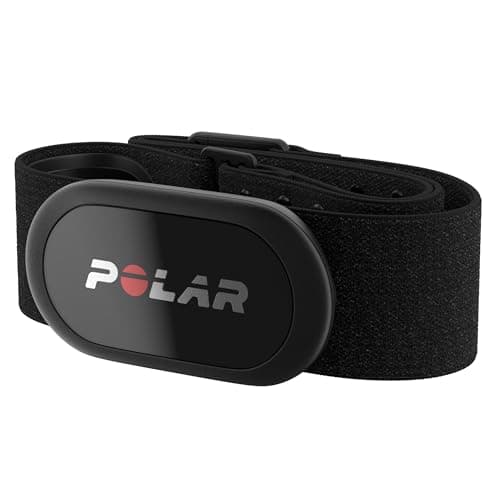
Anyone who trains by heart ratePolar H10
The device other people's validation studies use as the reference. That is the strongest recommendation a sensor can have.
Price as of October 22, 2026. Prices move; Amazon's is the one that counts.
#ad · we may earn a commission from this link to Polar H10
The short answer
Fix the input first. Your watch estimates VO2 max and threshold from pace and heart rate, and wrist heart rate is the weakest link during exactly the hard efforts these models learn from. A chest strap costs a fraction of a new watch. Then set your zones from a real test, because every device measured against a laboratory overestimated threshold pace.
Ranked
Quick picks
| # | Device | Best for | Evidence | Score | Price |
|---|---|---|---|---|---|
| 01 | Polar H10 The device other people's validation studies use as the reference. That is the strongest recommendation a sensor can have. | Anyone who trains by heart rate | Peer-reviewed validation | 8.9/10 | $104.45Amazon |
| 02 | 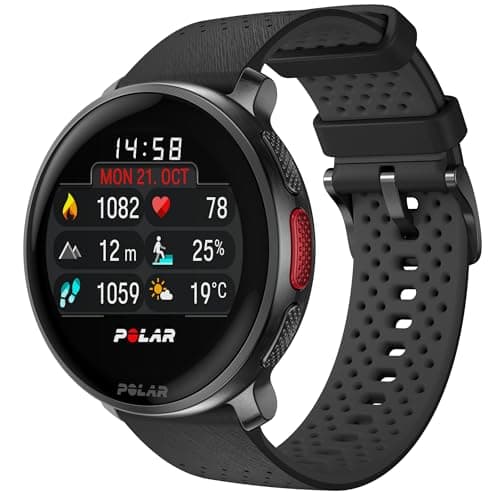 Polar Vantage V3 Polar's flagship, and the most sensor-dense watch here — including an on-wrist ECG. | Lab-style metrics on the wrist | Peer-reviewed validation | 7.5/10 | $679.90Amazon |
| 03 | 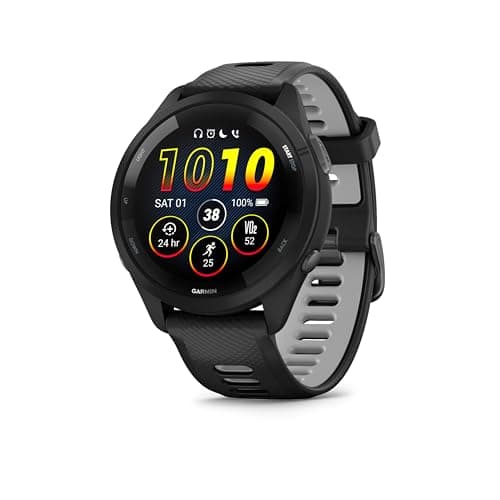 Garmin Forerunner 265 One of the very few watches on this site whose training estimates have actually been measured against a laboratory — and the measurement was not kind. | Runners who want a measured device, flaws included | Peer-reviewed validation | 7.2/10 | $434.90Amazon |
#ad· Live prices from the Amazon Product API, as of October 22, 2026. Where we have no verified live price we show none. Scores come from the published rubric at How we rank — the Evidence column shows what each ranking actually rests on, including where the answer is nothing.
The symptom
- Your watch's threshold pace is faster than anything you can hold for an hour
- The VO2 max number is well below what your race times imply
- The threshold test fails, or produces nothing usable, more often than it works
- Two devices on the same wrist give you two different fitness numbers
- Zones built from the watch leave your easy runs too hard and your intervals too slow
None of these is a fault. They are the documented behavior of estimation models, and the studies below quantify them.
What the published record actually says
VO2 max. Two laboratory validations of Apple Watch estimates found systematic underestimation: 6.07 mL/kg/min (13.31% mean error) against indirect calorimetry in 2025, and 4.51 mL/kg/min (15.79% error, intraclass correlation 0.47 — poor reliability) against a gas analyzer in 2024. Error grew with fitness, reaching 21.47% in the fittest group. For current Garmin, COROS, Polar and Suunto watches there is no validation at all that we could find.
Threshold. A 2025 study compared smartwatch threshold estimates against fingertip blood lactate in 100 recreational runners. Threshold pace carried mean errors of 12.70% (Huawei), 22.63% (COROS PACE 3) and 25.78% (Garmin Forerunner 265) — and all three overestimated. Threshold heart rate was far better at 5.95-7.15%, roughly 9-11 bpm, though no device met statistical equivalence with the laboratory. Tests also failed outright a large share of the time: success rates were 78%, 47.1% and 65.2% respectively.
Two independent findings, one clear pattern: the heart-rate side of these models holds up much better than the pace side. That is what determines the fix order below.
Fix 1 — improve the input, for the price of a strap
Every one of these models runs on heart rate. The 2025 placement study measured what happens to wrist heart rate under load: during burpees every optical device fell below 0.50 concordance with a chest-strap reference, and a wrist-worn watch showed a bias of roughly 33 bpm. Feed a model bad heart rate during interval sessions and it will learn the wrong relationship between pace and effort.
The Polar H10 is the sensor those studies used as ground truth. It is the cheapest item on this page by a wide margin, and it is the only change here with direct published evidence behind it. Notably, the Garmin protocol in the threshold study requireda chest strap — the manufacturer's own test design agrees with this advice.
Fix 2 — get one real test, once
A laboratory VO2 max or lactate test costs money and settles the question permanently for a training block. Failing that, a repeatable field test — a 30-minute time trial, or a structured ramp you re-run every eight weeks — gives you a threshold heart rate you can actually train from.
Either way, set zones from the tested number and let the watch's estimate be a trend line. A 25.78% pace error is useless as a prescription and still perfectly usable as a direction of travel.
Fix 3 — change the watch, if the platform is the problem
This is the last resort, not the first, and only two arguments for it survive contact with the evidence:
- Your watch cannot pair a strap or cannot run a threshold protocol at all. Then the platform genuinely limits you.
- You want the device whose behavior is documented. The Forerunner 265 is one of the very few watches with a published threshold measurement. It did badly — but you know exactly how badly and in which direction, which is more than any competitor offers.
The Polar Vantage V3is here for the sensor breadth — on-wrist ECG, skin temperature — and for Polar's guided testing protocols. Note honestly that Polar publishes no per-model validation either, and the only measured Polar HRV result came last of five devices.
What will not fix it
Buying a more expensive watch from the same brand. The estimation models are shared across a manufacturer's range — the flagship runs the same math as the mid-range on a better screen. Nothing in the published record suggests a price tier changes an estimate's accuracy.
In full
Every pick, and why
Polar H10
The device other people's validation studies use as the reference. That is the strongest recommendation a sensor can have.
- Sensor
- Electrical (ECG), chest strap
- Connectivity
- Bluetooth LE + ANT+
- Memory
- One session, up to 30 hours
- Battery (stated)
- Up to 400 h, CR2025 coin cell
- Water rating
- WR30
What's good
- Used as the criterion measure in published research — including the 2025 Sensors placement study on this site
- Simultaneous Bluetooth and ANT+, so it pairs to a watch and a bike computer at once
- 400 stated hours on a coin cell you replace rather than recharge
What isn't
- It is a chest strap, and a chest strap is less comfortable than a watch
- The strap wears out well before the sensor does
Skip this if
Skip this if you know yourself well enough to know you will not wear it. An unworn ECG strap measures nothing, and a wrist sensor you actually wear beats it every time.
What the evidence says
Peer-reviewed validationUsed as the reference standard in Sensors (2025), the anatomical-placement study of 28 participants. Being chosen as the criterion is an implicit validation by the researchers, though it means the study cannot measure the H10's own error.
Show how this 8.9 was calculated
| Factor | Weight | Score |
|---|---|---|
| EvidenceResearchers use it as the criterion measure. Nothing else in this category has a stronger evidentiary position. | 30% | 10.0 |
| HardwareElectrical ECG measurement rather than optical — a different and better physical principle for this job. | 20% | 9.5 |
| Metric coverageHeart rate and R-R intervals only; it does not pretend to do anything else. | 20% | 6.5 |
| Endurance400 stated hours on a replaceable coin cell. | 15% | 9.5 |
| Cost per capabilityInexpensive next to any watch, and it outlasts several of them. | 15% | 8.5 |
Price as of October 22, 2026. Prices move; Amazon's is the one that counts.
#ad · we may earn a commission from this link to Polar H10
Polar Vantage V3
Polar's flagship, and the most sensor-dense watch here — including an on-wrist ECG.
- Display
- AMOLED
- Satellite
- Dual-frequency GNSS
- Extras
- On-wrist ECG, skin temperature, offline maps
What's good
- The widest raw sensor set of any watch in this roundup
- Inherits the brand-level positioning result from the JMIR study
What isn't
- Priced against the Forerunner 970 without matching its ecosystem
- Sensor breadth is not the same thing as validated accuracy, and Polar publishes no per-model validation either
Skip this if
Skip this if you will not actually use the extra sensors. More measurements you ignore is not more value.
What the evidence says
Peer-reviewed validationSame dated, brand-level positioning evidence as the Vantage M3: Gilgen-Ammann et al. (2020) found only Polar's receivers under 5% error, testing the Vantage M, Vantage V and V800 — not the V3.
Show how this 7.5 was calculated
| Factor | Weight | Score |
|---|---|---|
| EvidenceFavorable but dated and brand-level peer-reviewed positioning evidence; no validation of this specific model. | 30% | 6.5 |
| HardwareDual-frequency GNSS plus the densest sensor package here, including wrist ECG. | 20% | 9.0 |
| Metric coverageVery wide metric coverage with a strong recovery platform. | 20% | 9.0 |
| EnduranceGood stated endurance for a sensor-heavy AMOLED watch. | 15% | 7.5 |
| Cost per capabilityFlagship pricing without a flagship ecosystem. | 15% | 5.5 |
Price as of October 22, 2026. Prices move; Amazon's is the one that counts.
#ad · we may earn a commission from this link to Polar Vantage V3
Garmin Forerunner 265
One of the very few watches on this site whose training estimates have actually been measured against a laboratory — and the measurement was not kind.
- Case
- 46mm AMOLED (the 265S is 42mm)
- Satellite
- All + Multi-Band GPS
- Battery (stated)
- 13 days smartwatch / 20 h GPS-only / 14 h all + multi-band
- Storage
- Up to 8 GB media, 5 ATM
What's good
- Multi-band positioning and an AMOLED screen in a mid-range Forerunner, in two case sizes
- It has actually been tested: in a 2025 study of 100 recreational runners, 23 of them wore a Forerunner 265 against fingertip blood lactate — more than can be said for most watches sold today
- 8 GB of on-watch music storage, so the phone can stay at home
What isn't
- In that study its threshold PACE estimate overshot the laboratory value by 25.78% on average, and it overestimated rather than erring low
- Its threshold test also failed to return a usable result 34.8% of the time
Skip this if
Skip this if you plan to set training zones from the watch's own threshold test. The one published measurement of that feature says it overestimates by roughly a quarter, and no firmware note undoes a published result.
What the evidence says
Peer-reviewed validationLu et al., Frontiers in Physiology 16:1621996 (2025), tested 100 recreational runners against fingertip blood lactate; 23 of them wore a Forerunner 265 or 265s. Its threshold pace estimate carried a mean error of 25.78% and overestimated; its threshold heart rate was much closer, inside the 5.95-7.15% band shared by the three watches tested; and its test produced a usable result 65.2% of the time. The authors note the Garmin protocol required an ECG chest strap while the other two devices used wrist sensing. That is a peer-reviewed measurement of this exact model — unusual in this category, and unflattering.
Show how this 7.2 was calculated
| Factor | Weight | Score |
|---|---|---|
| EvidenceA peer-reviewed measurement of this specific watch exists, which almost nothing else in the range can claim. It went badly, so this cannot score higher than mid. | 30% | 6.0 |
| HardwareAll + Multi-Band GPS and an AMOLED display in a mid-range case. | 20% | 8.5 |
| Metric coverageFull Garmin training platform and music storage; no maps. | 20% | 8.5 |
| EnduranceGarmin states 20 hours GPS-only, 14 hours all + multi-band, 13 days smartwatch. | 15% | 6.5 |
| Cost per capabilityMid-range sticker; a multi-band receiver at this price is the value here. | 15% | 7.0 |
Price as of October 22, 2026. Prices move; Amazon's is the one that counts.
#ad · we may earn a commission from this link to Garmin Forerunner 265
Accessories
What makes a strap read cleanly from the first minute
Unranked and unscored, deliberately: these are maintenance items with no validation literature behind them, listed because they fix the failures people blame on the sensor.
These are not ranked and they are not scored on the rubric — none of them has a validation study and none ever will. They are here because a manufacturer's own instructions say they change what your sensor records, and each one links the page that says it. How the actual ranking works.
Replacement chest-strap belt
A strap that has stretched, or whose electrodes have washed out.
Polar says it plainly on its own troubleshooting page: the chest strap "doesn't last forever; it wears out like any other garment you regularly wear and wash". The transmitter pod outlives the belt, and the belt is the cheap half. Polar support: unusual heart rate readings.
A third-party belt listed as fitting the Polar H7, H9 and H10 pods. Check the listing against your own sensor first — stud spacing differs between brands.
$12.99Check price on AmazonPrice as of October 22, 2026. Prices move; Amazon's is the one that counts.
#ad · we may earn a commission from this link to Replacement chest-strap belt
Conductive electrode gel
The spiky, nonsense heart rate over the first ten minutes of a run.
Polar's instruction is to "moisten the electrode area of the strap thoroughly under tap water before training". Gel is the same fix that does not evaporate in the first mile — which is precisely when the dropouts happen, because the strap has not warmed up and you have not started sweating yet. Polar support: unusual heart rate readings.
The linked tube is axion's 8.5 oz electrode gel, sold for TENS and EMS pads rather than for chest straps — the listing describes it as hypoallergenic, odorless and suitable for all types of self-adhesive electrodes. Nothing in this category is sold specifically for heart-rate straps, so check the ingredients if your skin reacts to anything.
$9.99Check price on AmazonPrice as of October 22, 2026. Prices move; Amazon's is the one that counts.
#ad · we may earn a commission from this link to Conductive electrode gel
Panasonic CR2025 coin cells
Dropouts and lost range from a sensor battery nobody has changed.
A weak cell does not fail cleanly. Polar states that "if the battery is running low, the transmission range decreases which may cause errors in heart rate readings" — so it degrades into bad data rather than into no data, which is the harder failure to notice. The H10 manual specifies a CR2025 and names Panasonic and Maxell as the brands it has found reliable. Polar H10 manual: batteries.
CR2025 is the cell for the Polar H10 and H9. Garmin's straps and other brands differ — check your own manual before ordering.
$6.28Check price on AmazonPrice as of October 22, 2026. Prices move; Amazon's is the one that counts.
#ad · we may earn a commission from this link to Panasonic CR2025 coin cells
Polar armband for Verity Sense
A spare or better-fitting band for the sensor placement that actually wins.
This is the accessory form of the strongest finding on this site: in the 2025 Sensors placement study, identical optical sensors moved off the wrist onto the forearm or upper arm beat the wrist at every intensity tested. The armband is the part that holds a sensor where that result applies, and Polar sells it on its own in M-XXL.
Polar's own armband, sold separately. It does not include the Verity Sense sensor itself.
$24.91Check price on AmazonPrice as of October 22, 2026. Prices move; Amazon's is the one that counts.
#ad · we may earn a commission from this link to Polar armband for Verity Sense
How this ranking was built
Every score on this page comes from one published rubric, applied identically to every device on the site, with the weights written down and the inputs shown. We have not worn any of these devices and we never say we have. Read the method and check us.
Questions
Frequently asked
Why is my watch's VO2 max lower than my race times suggest?
Because the documented error runs that way, and it worsens with fitness. In the fitness-stratified results of a 2024 validation, the fittest group's laboratory value was 54.70 mL/kg/min against a watch estimate of 42.70 — a 21.47% mean error. The model infers capacity from pace and heart rate, and at the top end that relationship stops discriminating.
Will a chest strap improve my VO2 max estimate?
It improves the input the estimate is built from, which is the most useful thing you can do short of a laboratory. No study we have read isolates how much the estimate improves, so we will not put a number on it — but the evidence that wrist heart rate degrades badly under load is unambiguous.
Should I trust threshold pace or threshold heart rate?
Heart rate, clearly. In the 2025 study threshold heart rate landed inside a 5.95-7.15% band — roughly 9-11 bpm — while threshold pace was out by 12.70% to 25.78% depending on the device, always in the optimistic direction.
Do Garmin, COROS and Polar publish accuracy figures for these features?
No validation of any current model's VO2 max estimate has been published that we could find, from any of them. The one exception is the 2025 threshold study, which measured a Forerunner 265 and a COROS PACE 3 — both overestimated pace. Everything else in this space is a manufacturer claim.
Show your working
Sources
Every one of these was read in full before it was cited. Where we could not access a paper, we do not quote its numbers.
- [1]Peer-reviewed validation2025Lambe, O’Grady, Baldwin & Doherty, “Investigating the accuracy of Apple Watch VO2 max measurements: A validation study”, PLOS ONE 20(5):e0323741
DOI 10.1371/journal.pone.0323741. 28 analyzed participants across Apple Watch Series 5-9, SE 2 and Ultra 2 on watchOS 10+, against indirect calorimetry (COSMED Quark CPET, modified Åstrand treadmill protocol). Authors’ stated limits: the sample skewed strongly toward high cardiorespiratory fitness, watch estimates were generated uncontrolled, and only one estimate per participant was collected.
- [2]Peer-reviewed validation2024Caserman, Yum, Göbel, Reif & Matura, “Assessing the Accuracy of Smartwatch-Based Estimation of Maximum Oxygen Uptake Using the Apple Watch Series 7: Validation Study”, JMIR Biomedical Engineering 9:e59459
DOI 10.2196/59459. n = 19 (12 male, 7 female, mean age 28.4), Apple Watch Series 7 against a VO2 Master portable gas analyzer on a graded cycle ergometer test. Authors’ stated limits: the sample was 19 rather than the 30 planned, testing was submaximal, no blood lactate was taken, and the watch figure came from a single outdoor session where Apple’s own validation used an average of 441 days of data.
- [3]Peer-reviewed validation2025Lu, Cui, Zhu, Wu, Xing, Pan & Shen, “Validity of smartwatch-derived estimates of lactate threshold heart rate and pace compared to graded exercise testing”, Frontiers in Physiology 16:1621996
DOI 10.3389/fphys.2025.1621996. 100 healthy recreational runners (61 male, 39 female, 28.0 ± 9.6 years) against a treadmill graded exercise test with fingertip blood lactate (Biosen C-line), threshold determined by the modified Dmax method. Device counts were unequal: Huawei GT Runner n = 100, Garmin Forerunner 265/265s n = 23, COROS PACE 3 n = 17. Authors’ stated limits: unbalanced samples, indoor reference against outdoor watch tests, day-to-day threshold variability, and different heart-rate acquisition between devices — the Garmin protocol required an ECG chest strap while the other two used wrist PPG — plus undisclosed manufacturer algorithms.
- [4]Peer-reviewed validation2025“Impact of Anatomical Placement on the Accuracy of Wearable Heart Rate Monitors During Rest and Various Exercise Intensities”, Sensors (Basel)
n = 28 (14 male, 14 female). Polar H10 chest strap as the reference. Compared Polar Verity Sense (forearm), Garmin Forerunner 55 (wrist) and three simultaneous Whoop 4.0 units at wrist, forearm and upper arm, across rest, cycling warm-up, burpees and a modified Bruce treadmill protocol.
- [5]Manufacturer specification2026Polar — H10 heart rate sensor published specifications
Manufacturer-stated: electrical (ECG) measurement, Bluetooth LE + ANT+, internal memory for one session up to 30 hours, up to 400 h on a CR2025 coin cell, WR30.
Read next
Related
- Training status explained
The label built on the estimates this page is about to improve.
- VO2 max accuracy by device
Every published figure, and every device with none.
- Lactate threshold, explained
The full 2025 study, including the test failure rates.
- Fix wrist heart rate first
The input these models depend on, and the cheapest fix on the site.
- Polar H10 review
The strap researchers use as ground truth.