Straps, armbands and sensors
The best heart rate monitors for zone 2 training
Zone 2 is a narrow band at low intensity, which is the one condition optical sensors handle reasonably well. The error that actually ruins it comes from somewhere else entirely.
We earn a commission when you buy through our Amazon links, at no extra cost to you. It never decides a ranking — the rubric that does is published in full, so you can check us rather than take our word for it. How this works.
Top pick
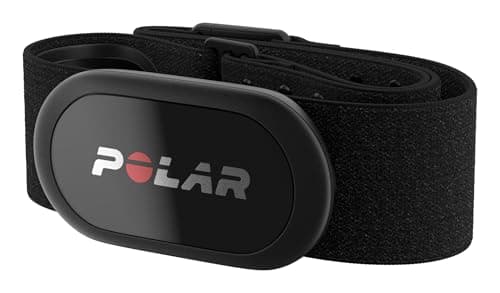
Anyone who trains by heart ratePolar H10
The device other people's validation studies use as the reference. That is the strongest recommendation a sensor can have.
Price as of October 21, 2026. Prices move; Amazon's is the one that counts.
#ad · we may earn a commission from this link to Polar H10
The short answer
For zone 2 the sensor to buy is the Polar H10 - the strap published studies use as their reference - or the Verity Sensearmband if you will not wear a chest strap. But the larger error in most people's zone 2 is not the sensor at all: it is a maximum heart rate the watch estimated from your age. Fix that first; it is free.
Ranked
Quick picks
| # | Device | Best for | Evidence | Score | Price |
|---|---|---|---|---|---|
| 01 | Polar H10 The device other people's validation studies use as the reference. That is the strongest recommendation a sensor can have. | Anyone who trains by heart rate | Peer-reviewed validation | 8.9/10 | $104.45Amazon |
| 02 | 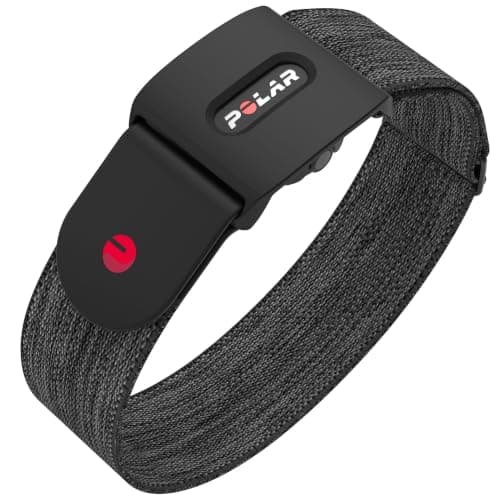 Polar Verity Sense The optical armband that measured a bias under 0.1 bpm against a chest strap on a graded treadmill test. The comfortable answer. | Strap-quality data without the strap | Peer-reviewed validation | 8.4/10 | $104.95Amazon |
| 03 | 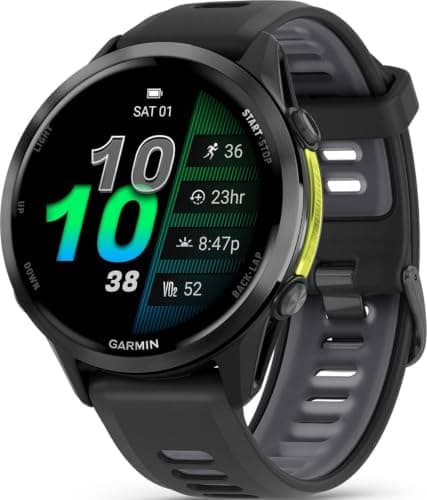 Garmin Forerunner 970 The most complete running watch Garmin sells, and — counter-intuitively — the cheapest of the pair per hour of GPS you get. | Long-course athletes who want maps | Manufacturer specification | 7.7/10 | $749.99Amazon |
| 04 | 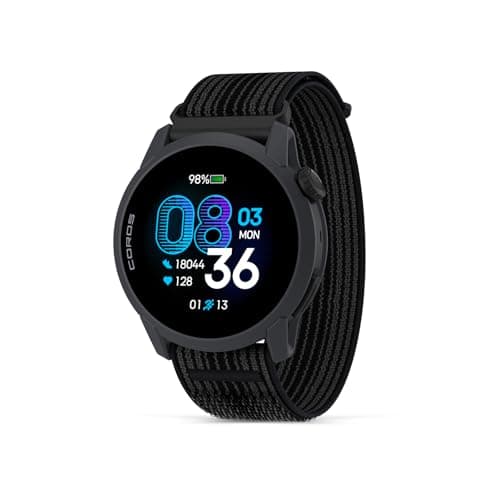 COROS PACE 4 41 stated GPS hours in a 32-gram watch, for a third of the Forerunner 970's money. The endurance-per-dollar winner by a distance. | Long days on a budget | Independent measured test | 7.5/10 | $249.00Amazon |
#ad· Live prices from the Amazon Product API, as of October 21, 2026. Where we have no verified live price we show none. Scores come from the published rubric at How we rank — the Evidence column shows what each ranking actually rests on, including where the answer is nothing.
Why zone 2 is the easy case for a sensor and the hard case for a watch
Zone 2 is, by the five-zone convention, 60-70% of maximum heart rate - a band roughly ten beats wide for most adults, held for a long time at a steady, easy effort. That description contains both the good news and the bad news.
The good news is the condition. Optical sensors fail hardest during rapid intensity change: in the 2025 placement study every optical device tested fell below 0.50 concordance in the burpee protocol, while on the graded treadmill protocol a forearm band held a bias under 0.1 bpm with 0.997 concordance and recorded roughly 1.6% error at rest. Steady low-intensity work is the regime where optical measurement looks its best. A good sensor at zone 2 really is close to a chest strap.
The bad news is the band width. A ten-beat window means a few beats of error moves you out of the zone you are trying to hold - and the error that does that is usually not the sensor's. Garmin states in its own manual that "the watch uses your user profile information from the initial setup to determine your default heart rate zones", that lactate threshold can be auto-detected, and that maximum heart rate cannot- you have to set it. Polar's own guide says outright that the simplest way to establish a maximum is 220 minus your age.
Put numbers on that. If your true maximum is 190 and the convention gives 180 at age 40, your zone 2 ceiling moves from 133 to 126 - a seven-beat shift in a ten-beat window, from a rule of thumb, before any sensor has measured anything. That is larger than the measured error of every device on this page. The free fix is worth more than the paid one, which is not a sentence a page selling sensors usually writes.
The picks, and what each is for
Polar H10 - the reference instrument. It is the strap researchers choose as their ground truth: the reference in the 2025 placement study and in Dial et al. (2025), where it ran as a single-lead ECG sampled at 1000 Hz across 536 nights. Polar states simultaneous Bluetooth LE and ANT+, memory for one session up to 30 hours, and up to 400 hours on a CR2025 coin cell. For a long steady ride or run where you want to be certain the number is real, this is the answer and it is not close.
Polar Verity Sense - strap-class data without the strap. This is the pick for most people doing most zone 2, because zone 2 sessions are long and comfort decides whether they happen. It is the device that recorded the sub-0.1 bpm bias on the graded treadmill protocol and the lowest resting error in that study, worn on the forearm or upper arm. Our ranking puts the H10 first because it is the reference; in practice the gap at this intensity is small enough that the more comfortable device is often the better buy.
Garmin Forerunner 970 - best watch for running the zone. A sensor you cannot see mid-run does not help you hold a band. Garmin states 26 hours in GPS mode and 15 smartwatch days, and the platform gives you editable zones, a zone gauge on the data screen, alerts at the boundaries and HRV status. It pairs either sensor above. The wrist sensor is the part to be skeptical of: no independent validation of it exists that we could find.
COROS PACE 4 - the cheap route in. COROS states 41 hours of All-Systems GPS and 19 days of daily use in a 32-gram case, which is the best endurance-per-dollar on this site - and long zone 2 blocks are exactly where stated hours get used. COROS itself recommends pairing a Bluetooth strap, and given that the one independent test of a COROS wrist sensor flagged intensity changes, that is advice worth taking.
How to set zone 2 so the number means something
Three steps, in order of how much they change the answer.
1. Replace the estimated maximum.Either from a recent hard race effort or a supervised maximal test, or - better for zone 2 specifically - use a threshold-based method instead of a percentage of maximum. Garmin's manual offers zones as %Max HR or %HRR (heart rate reserve: maximum minus resting), and HRR is the less wrong of the two if your resting rate is unusual.
2. Do not trust a derived threshold more than its completion rate. The 2025 lactate threshold study of 100 runners found a Garmin Forerunner 265 returned a usable threshold result 65.2% of the time - the best of the three watches tested - and that protocol required a chest strap rather than the wrist sensor. A watch-estimated threshold is a model output, and what it is actually estimating is worth understanding before you set zones from it.
3. Then, and only then, worry about the sensor. Pooled across 249 validation studies the 2024 umbrella review puts wearable heart rate near ±3% with a mean bias of -3.39 bpm. At a zone 2 ceiling of 133 bpm, 3% is about four beats. Real, worth removing, and smaller than the zone error you just fixed for nothing.
The zone model itself is explained at heart rate zones explained, and if you want the watch-first version of this decision it is at best heart rate monitor watches.
In full
Every pick, and why
Polar H10
The device other people's validation studies use as the reference. That is the strongest recommendation a sensor can have.
- Sensor
- Electrical (ECG), chest strap
- Connectivity
- Bluetooth LE + ANT+
- Memory
- One session, up to 30 hours
- Battery (stated)
- Up to 400 h, CR2025 coin cell
- Water rating
- WR30
What's good
- Used as the criterion measure in published research — including the 2025 Sensors placement study on this site
- Simultaneous Bluetooth and ANT+, so it pairs to a watch and a bike computer at once
- 400 stated hours on a coin cell you replace rather than recharge
What isn't
- It is a chest strap, and a chest strap is less comfortable than a watch
- The strap wears out well before the sensor does
Skip this if
Skip this if you know yourself well enough to know you will not wear it. An unworn ECG strap measures nothing, and a wrist sensor you actually wear beats it every time.
What the evidence says
Peer-reviewed validationUsed as the reference standard in Sensors (2025), the anatomical-placement study of 28 participants. Being chosen as the criterion is an implicit validation by the researchers, though it means the study cannot measure the H10's own error.
Show how this 8.9 was calculated
| Factor | Weight | Score |
|---|---|---|
| EvidenceResearchers use it as the criterion measure. Nothing else in this category has a stronger evidentiary position. | 30% | 10.0 |
| HardwareElectrical ECG measurement rather than optical — a different and better physical principle for this job. | 20% | 9.5 |
| Metric coverageHeart rate and R-R intervals only; it does not pretend to do anything else. | 20% | 6.5 |
| Endurance400 stated hours on a replaceable coin cell. | 15% | 9.5 |
| Cost per capabilityInexpensive next to any watch, and it outlasts several of them. | 15% | 8.5 |
Price as of October 21, 2026. Prices move; Amazon's is the one that counts.
#ad · we may earn a commission from this link to Polar H10
Polar Verity Sense
The optical armband that measured a bias under 0.1 bpm against a chest strap on a graded treadmill test. The comfortable answer.
- Sensor
- Optical, forearm or upper-arm band
- Connectivity
- Bluetooth (dual) + ANT+
- Modes
- Live streaming, on-board recording, swim mode
What's good
- Sensors (2025) recorded the smallest bias of any device tested on the graded treadmill protocol — under 0.1 bpm, CCC = 0.997
- Lowest resting error in the same study, at roughly 1.6% MAPE
- Far more comfortable than a chest strap, and it works under a wetsuit
What isn't
- Still an extra device to charge and remember
- Like every optical sensor, it struggled in the same study's burpee protocol — nothing optical handles that well
Skip this if
Skip this if your training is mostly explosive, stop-start work. In the burpee protocol every optical device tested fell below 0.50 concordance, this one included. Buy the H10 for that.
What the evidence says
Peer-reviewed validationDirectly measured in Sensors (2025), n = 28, against a Polar H10 reference: lowest resting MAPE at ~1.6 ± 0.8%, and the smallest bias on the modified Bruce treadmill protocol at under 0.1 bpm (CCC = 0.997).
Show how this 8.4 was calculated
| Factor | Weight | Score |
|---|---|---|
| EvidenceDirectly measured in a peer-reviewed study, with the best result of any optical device tested. | 30% | 9.5 |
| HardwareOptical, but worn on the forearm — the placement the same study found outperforms the wrist. | 20% | 8.5 |
| Metric coverageHeart rate plus on-board recording and a swim mode. | 20% | 7.0 |
| EnduranceRechargeable, with stated endurance comfortably covering long sessions. | 15% | 8.0 |
| Cost per capabilityPriced against a good chest strap, not against a watch. | 15% | 8.5 |
Price as of October 21, 2026. Prices move; Amazon's is the one that counts.
#ad · we may earn a commission from this link to Polar Verity Sense
Garmin Forerunner 970
The most complete running watch Garmin sells, and — counter-intuitively — the cheapest of the pair per hour of GPS you get.
- Case
- 47mm, titanium bezel, AMOLED
- Satellite
- Multi-band GNSS with SatIQ
- Battery (stated)
- 15 days smartwatch / 26 h GPS
- Maps
- Built-in, full color
- Extras
- ECG app, speaker and microphone
What's good
- Multi-band GNSS with SatIQ — the current top tier of consumer positioning hardware
- 26 stated GPS hours is enough for an ironman-distance day with a wide margin
- Built-in maps, which the 570 does not have at any price
What isn't
- The wrist optical sensor is the same class of hardware as the 570's — the premium buys features, not a better heart-rate signal
- 47mm only; there is no smaller case in this model
Skip this if
Skip this if you never race longer than a marathon and never navigate. Maps and titanium are the entire difference, and neither changes a single number the watch records.
What the evidence says
Manufacturer specificationNo independent validation study of the Forerunner 970's optical heart rate has been published that we could find. The specification figures are Garmin's own.
Show how this 7.7 was calculated
| Factor | Weight | Score |
|---|---|---|
| EvidenceSpecs are published and detailed, but no peer-reviewed or independent measured validation of this specific model exists yet. | 30% | 5.5 |
| HardwareMulti-band GNSS with SatIQ and Garmin's current-generation optical sensor — the top hardware tier available. | 20% | 9.5 |
| Metric coverageRunning dynamics, ECG, training load, maps, and a documented export path off the watch. | 20% | 9.5 |
| EnduranceGarmin states 26 hours in GPS mode, 15 days smartwatch. | 15% | 7.5 |
| Cost per capabilityHighest sticker in the range, but the strongest dollars-per-GPS-hour of the two Forerunners — see the arithmetic on the comparison page. | 15% | 7.5 |
Price as of October 21, 2026. Prices move; Amazon's is the one that counts.
#ad · we may earn a commission from this link to Garmin Forerunner 970
COROS PACE 4
41 stated GPS hours in a 32-gram watch, for a third of the Forerunner 970's money. The endurance-per-dollar winner by a distance.
- Display
- 1.2" AMOLED touchscreen
- Weight
- 32 g with nylon band, 40 g with silicone
- Satellite
- All-Systems and Dual-Frequency modes
- Battery (stated)
- 19 days daily use / 41 h GPS (All-Systems)
- Thickness
- 11.8 mm
What's good
- 41 manufacturer-stated GPS hours — more than the Forerunner 970 and the 570 combined
- 32 g is light enough that you stop noticing it, which matters more over 100 miles than any feature
- Dual-frequency positioning at an entry-level price
What isn't
- COROS wrist heart rate is the one area where an independent test has published a specific problem — see the evidence note
- Smaller third-party app ecosystem than Garmin's
Skip this if
Skip this if you train by heart rate off the wrist and will not wear a strap. The one independent test we found flagged COROS wrist HR during exactly the intervals you would be buying it for.
What the evidence says
Independent measured testThe5krunner's measured comparison found the previous-generation PACE 3's wrist heart rate diverged during and after rapid intensity changes. That test was of the PACE 3, not the PACE 4, and the author cautions the dataset was limited. COROS states the PACE 4 has a redesigned sensor; no independent test of the new sensor has been published that we could find.
Show how this 7.5 was calculated
| Factor | Weight | Score |
|---|---|---|
| EvidenceThe only independent measured evidence in the range is a limited-dataset test of the PREVIOUS model, and it was unfavorable. The redesigned sensor is unvalidated. | 30% | 4.5 |
| HardwareDual-frequency GNSS and a redesigned optical sensor, per the COROS spec page. | 20% | 8.0 |
| Metric coverageStrong training metrics; a narrower ecosystem than Garmin for third-party integrations. | 20% | 7.5 |
| Endurance41 stated GPS hours in All-Systems mode is the best in this roundup by a wide margin. | 15% | 10.0 |
| Cost per capabilityComfortably the strongest dollars-per-GPS-hour figure on the site. | 15% | 10.0 |
Price as of October 21, 2026. Prices move; Amazon's is the one that counts.
#ad · we may earn a commission from this link to COROS PACE 4
The zone 2 kit list, cheapest first
- Free: set your real maximum heart rate - or switch to heart rate reserve. This is the biggest single improvement available and it costs nothing.
- About a hundred dollars: an armband or a strap. For long steady work the armband is usually the one you will keep wearing. For certainty, the H10.
- Only then, a watch. A watch earns its place by showing you the band while you are in it, with alerts at the edges - not by measuring better.
- Do not buy a wrist-only device for this. It will work better at zone 2 than anywhere else, and it is still the least accurate option in the measured record.
How this ranking was built
Every score on this page comes from one published rubric, applied identically to every device on the site, with the weights written down and the inputs shown. We have not worn any of these devices and we never say we have. Read the method and check us.
Questions
Frequently asked
What heart rate monitor is best for zone 2?
A chest strap or a forearm armband. The Polar H10 is the instrument published studies use as their reference; the Verity Sense armband matched a strap to under 0.1 bpm bias on a graded treadmill protocol and is far more comfortable for the long sessions zone 2 requires.
Is a wrist heart rate monitor good enough for zone 2?
Better than it is for anything else, because steady low intensity is the condition optical sensors handle best. It is still the least accurate position in the measured record, and zone 2 is a narrow band where a few beats matter.
Why does my watch put me in zone 3 when the effort feels easy?
Most often because your zones are built on an estimated maximum heart rate. If the estimate is ten beats low, every boundary shifts down by about seven - enough to move a genuine zone 2 effort into zone 3 on the display. Set your real maximum, or use heart rate reserve.
How wide is zone 2 in beats?
On the five-zone convention it spans 60-70% of maximum heart rate, which for a maximum of 190 is 114 to 133 - about nineteen beats, and the useful upper half of that is narrower still. The zones themselves are a convention rather than a measurement, which is why getting the maximum right matters more than the sensor.
Show your working
Sources
Every one of these was read in full before it was cited. Where we could not access a paper, we do not quote its numbers.
- [1]Peer-reviewed validation2025“Impact of Anatomical Placement on the Accuracy of Wearable Heart Rate Monitors During Rest and Various Exercise Intensities”, Sensors (Basel)
n = 28 (14 male, 14 female). Polar H10 chest strap as the reference. Compared Polar Verity Sense (forearm), Garmin Forerunner 55 (wrist) and three simultaneous Whoop 4.0 units at wrist, forearm and upper arm, across rest, cycling warm-up, burpees and a modified Bruce treadmill protocol.
- [2]Manufacturer claim only2026Polar — “Heart Rate Zones”, published training guide
Polar's own published guide, read 2026-09-18. States the five-zone model as percentages of maximum heart rate — zone 1 at 50-60%, zone 2 at 60-70%, zone 3 at 70-80%, zone 4 at 80-90%, zone 5 at 90-100% — and that the “most simple way” to establish maximum heart rate is “the rule 220-your age”. Tiered as a manufacturer claim rather than a specification: it is training guidance, and the zone boundaries themselves are a convention, not a measurement.
- [3]Manufacturer specification2026Garmin — Forerunner 265 Series owner's manual, “Setting Your Heart Rate Zones”
Manufacturer-stated, read 2026-09-18. Garmin states that “the watch uses your user profile information from the initial setup to determine your default heart rate zones”, that “for the most accurate calorie data during your activity, set your maximum heart rate”, and that zones can be based on BPM, “%Max. HR” or “%HRR” (heart rate reserve, defined in the manual as maximum heart rate minus resting heart rate). Lactate threshold heart rate is entered separately and can be auto-detected; maximum heart rate is not.
- [4]Manufacturer specification2026Polar — H10 heart rate sensor published specifications
Manufacturer-stated: electrical (ECG) measurement, Bluetooth LE + ANT+, internal memory for one session up to 30 hours, up to 400 h on a CR2025 coin cell, WR30.
- [5]Manufacturer specification2026Polar — Verity Sense published specifications
Manufacturer-stated: optical heart rate worn on the forearm or upper arm, dual Bluetooth plus ANT+, on-board recording, swim mode, WR50.
- [6]Peer-reviewed validation2025Dial, Hollander, Vatne, Emerson, Edwards & Hagen, “Validation of nocturnal resting heart rate and heart rate variability in consumer wearables”, Physiological Reports 13(16):e70527
DOI 10.14814/phy2.70527. n = 13 healthy adults (7 male, 6 female, 33.2 ± 8.6 years) across 536 nights, each wearing an Oura Gen 3, Oura Gen 4, Polar Grit X Pro, Garmin fēnix 6 and Whoop 4.0 simultaneously against a Polar H10 single-lead ECG reference sampled at 1000 Hz. Authors’ stated limits: healthy adults only, no atrial-fibrillation population, proprietary and periodically-updated algorithms, and unequal night counts per device. The Garmin was dropped from the resting-heart-rate comparison because the 30-minute window it uses is not timestamped.
- [7]Peer-reviewed validation2024Doherty, Baldwin, Keogh, Caulfield & Argent, “Keeping Pace with Wearables: A Living Umbrella Review of Systematic Reviews Evaluating the Accuracy of Consumer Wearable Technologies in Health Measurement”, Sports Medicine
DOI 10.1007/s40279-024-02077-2. An umbrella review: 24 systematic reviews covering 249 unique primary validation studies and 430,465 participants (43% female), across 11 biometric outcomes, with roughly 34 of 310 identified consumer wearables ever validated. Reported accuracy by metric: heart rate approximately ±3% (mean bias −3.39 bpm); step count mean absolute percentage error from −9% to 12%; energy expenditure mean bias −3 kcal per minute with error ranging from −21.27% to 14.76%. Authors’ stated limits: a temporal lag between device release and published research, the intrinsic bias of a tertiary synthesis, and heterogeneity of protocols, devices, criterion measures and statistics severe enough that the authors did not pool a meta-analysis.
- [8]Peer-reviewed validation2025Lu, Cui, Zhu, Wu, Xing, Pan & Shen, “Validity of smartwatch-derived estimates of lactate threshold heart rate and pace compared to graded exercise testing”, Frontiers in Physiology 16:1621996
DOI 10.3389/fphys.2025.1621996. 100 healthy recreational runners (61 male, 39 female, 28.0 ± 9.6 years) against a treadmill graded exercise test with fingertip blood lactate (Biosen C-line), threshold determined by the modified Dmax method. Device counts were unequal: Huawei GT Runner n = 100, Garmin Forerunner 265/265s n = 23, COROS PACE 3 n = 17. Authors’ stated limits: unbalanced samples, indoor reference against outdoor watch tests, day-to-day threshold variability, and different heart-rate acquisition between devices — the Garmin protocol required an ECG chest strap while the other two used wrist PPG — plus undisclosed manufacturer algorithms.
- [9]Manufacturer specification2026Garmin — Forerunner 970 published specifications
Manufacturer-stated battery: up to 15 days smartwatch mode, up to 26 hours GPS mode.
- [10]Manufacturer specification2026COROS — PACE 4 published specifications
Manufacturer-stated: 1.2" AMOLED, 32 g with nylon band, 11.8 mm thick, All-Systems and Dual-Frequency satellite modes, 41 GPS hours, 19 days of daily training and sleep.
Read next
Related
- Heart rate zones explained
Where the five-zone model comes from, and what it is not.
- Chest strap vs armband
The comfort-versus-certainty decision, with the measured numbers for both.
- Best heart rate monitor watches
If you want the zone on your wrist rather than a separate sensor.
- Lactate threshold explained
The better anchor for zones than a percentage of an estimated maximum.