The evidence scoreboard
The best fitness trackers for women
The honest version of this page is narrower than most: makers publish very little sizing data, and almost no validation study reports results by sex. Here is what is actually published, and what it rules in.
We earn a commission when you buy through our Amazon links, at no extra cost to you. It never decides a ranking — the rubric that does is published in full, so you can check us rather than take our word for it. How this works.
Top pick
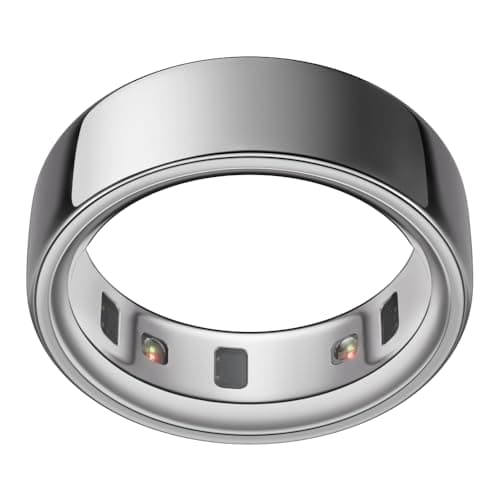
Sleep staging you can actually citeOura Ring 4
The only consumer sleep device with a strong independent PSG result behind it — 76.3% four-stage agreement, and the best deep-sleep sensitivity of the three tested.
$349.0029% off
Price as of November 21, 2026. Prices move; Amazon's is the one that counts.
#ad · we may earn a commission from this link to Oura Ring 4
The short answer
The top pick is the Oura Ring 4: it publishes a full size range and real dimensions, it is the smallest device here by a wide margin, and it is the only one with a head-to-head polysomnography result behind it. The budget pick is the Garmin HRM-Fit, which clips to a sports bra band instead of adding a strap - the cheapest genuine fit improvement on this roster.
Ranked
Quick picks
| # | Device | Best for | Evidence | Score | Price |
|---|---|---|---|---|---|
| 01 | Oura Ring 4 The only consumer sleep device with a strong independent PSG result behind it — 76.3% four-stage agreement, and the best deep-sleep sensitivity of the three tested. | Sleep staging you can actually cite | Peer-reviewed validation | 8.0/10 | $249.00Amazon |
| 02 | 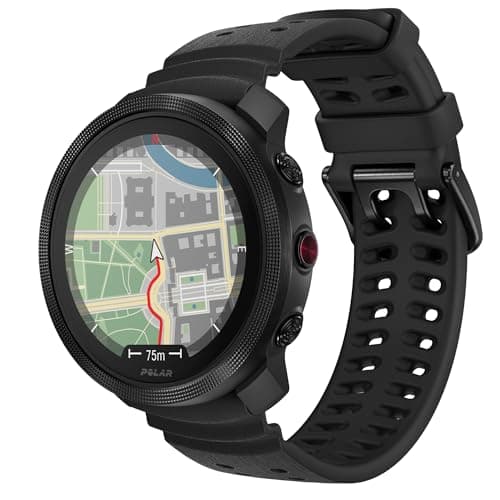 Polar Vantage M3 The pick when positioning accuracy is the thing you actually care about — Polar was the one brand under 5% error in the eight-watch validation study. | Runners who want the best-validated GPS | Peer-reviewed validation | 7.5/10 | $412.36Amazon |
| 03 | 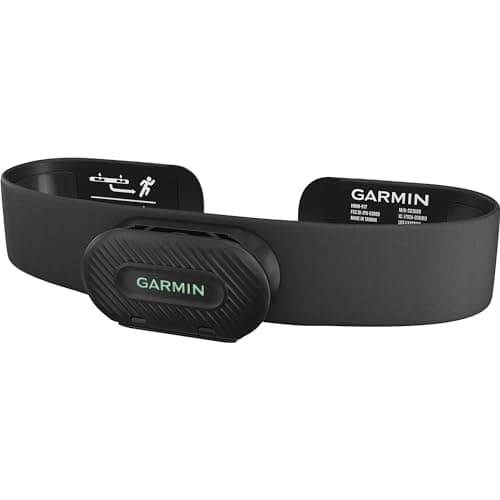 Garmin HRM-Fit Garmin's electrical sensor with the chest strap taken away — it clips to a sports bra band instead, and keeps the running dynamics. | Running dynamics without a strap | Manufacturer specification | 7.2/10 | $109.50Amazon |
| 04 | 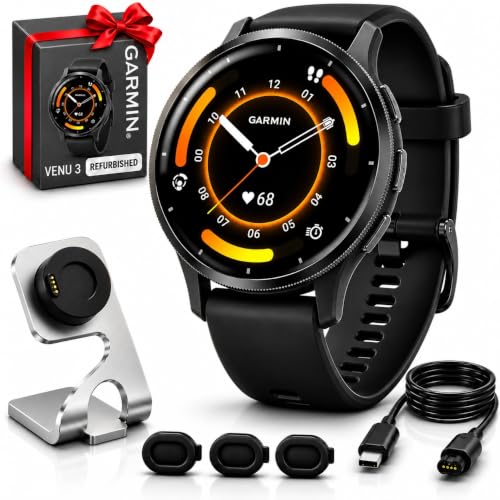 Garmin Venu 3 The sleep-and-recovery watch for people who already trust Garmin's training data. | One device for training and sleep | Manufacturer specification | 7.2/10 | $269.99Amazon |
| 05 | 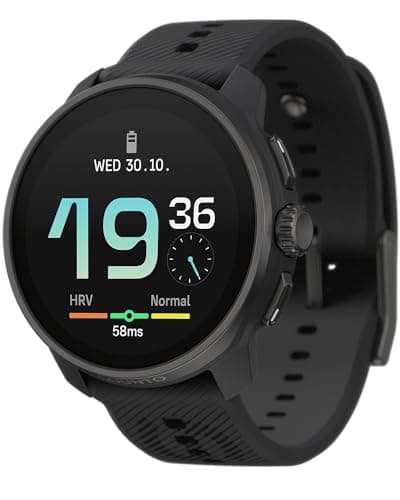 Suunto Race S A big AMOLED and dual-frequency positioning at a price that undercuts the mid-range Garmins. | Value AMOLED multi-sport | No validation study exists | 6.5/10 | $249.00Amazon |
#ad· Live prices from the Amazon Product API, as of November 21, 2026. Where we have no verified live price we show none. Scores come from the published rubric at How we rank — the Evidence column shows what each ranking actually rests on, including where the answer is nothing.
What this page can honestly claim, and what it cannot
Start with the limit, because most pages with this title do not. The 2024 living umbrella review synthesized 24 systematic reviews and 249 primary validation studies covering 430,465 participants, 43% of them female - and reported its accuracy findings by metric, not by sex. The 2025 placement study is one of the few that even states the split (14 male, 14 female of 28) and it too reports by sensor position rather than by sex. So: no device on this page has been shown to measure women more accurately than another, and anyone telling you otherwise is reading something we could not find.
What is published, and what this page therefore ranks on, is narrower and more useful:
- Published sizing and dimensions. Whether the maker tells you what the device actually measures and in how many sizes, rather than showing you a photo.
- Where the sensor sits and how it is held on. The placement study found position beat brand, with the wrist the weakest of three sites - and a device that fits badly is a device worn loosely.
- The evidence record, unchanged. Same rubric, same 30% weight, no separate scoring for this page.
1. Oura Ring 4 - the most published sizing data on the site
Oura publishes 7.90 mm wide and 2.88 mm thick, 3.3 to 5.2 grams depending on size, six finishes, a size-specific charger, 5 to 8 days of battery depending on ring size and lifestyle with a typical charge of 20 to 80 minutes, water resistance to 100 m, and a sensor list naming red and infrared LEDs for blood oxygen and alternating green and infrared LEDs for continuous heart rate, HRV and respiration. That is more published dimensional detail than any watch on this site offers.
It also carries the strongest evidence tier here. In Robbins et al. (2024), 35 adults slept an inpatient night with polysomnography wearing three devices, and the Oura took the best four-stage agreement at 76.3% with 79.5% deep-sleep sensitivity. It scores 8.0. Two honest limits: Oura Membership is listed at $5.99 a month or $69.99 a year after the first month, so the real figure is $459; and a ring measures from a finger, which means it tracks no workout, no pace and no route.
2. Polar Vantage M3 - the brand with the measured GPS result
If you want one watch rather than a ring, Gilgen-Ammann et al. (2020) measured eight GPS watches and the Polar models were the ones that cleared the under-5% band - the only favorable independent positioning result on this site. The caveat is permanent: those were older single-frequency watches, none on sale, so it is a brand-level inference rather than a test of the M3.
And the caveat that belongs on a page about fit in particular: Polar's own M3 specification page has never been readable from this environment, so this site quotes no case dimension, weight or battery figure for it anywhere, including here. That is precisely the kind of gap a fit-led page should flag rather than paper over. It scores 7.5 and under $500 today.
3. The budget pick: Garmin HRM-Fit
The cheapest real improvement on this page is not a tracker at all. Garmin states a user-replaceable CR2032 cell, battery life "up to 1 yr. at 1 hr./day", 3 ATM water resistance, an operating range of 0 to 40 degrees Celsius and a 2.4 GHz radio - and the design point is that it clips to a medium or high-support sports bra band instead of adding a separate chest strap.
That matters because of the placement finding above: an electrode on the torso beats a wrist sensor, and the most common reason people stop using a chest strap is the strap itself. It scores 7.2 and under $200 today. One specification to know before you buy, and Garmin publishes it: 3 ATM, which is below the 5 ATM Garmin rates its own chest straps at - so this is the one item here you should not take swimming.
4. Garmin Venu 3 - the long-battery everyday watch, in two sizes
Garmin's battery page states figures for both the Venu 3S and the Venu 3, which is itself the useful part: up to 10 days and 14 days in smartwatch mode, 20 and 26 days with battery saver, 21 and 26 hours GPS Only, 15 and 20 hours All Systems. The 3S exists as a genuinely smaller case rather than a color option, and the two sets of figures let you see exactly what the smaller case costs in endurance. The specification page adds a "Swim, 5 ATM" rating.
It scores 7.2. The honest gap, and it is the same one this site flags on every Venu page: the web edition of that manual publishes no case dimensions or weights at all, so we quote none - on a page about fit, that absence is worth naming twice.
5. Suunto Race S - the smaller-cased multisport option
Suunto states an AMOLED touchscreen in a smaller case than the standard Race, up to 30 hours of training with continuous GPS tracking, up to 9 days of daily use with heart rate on and up to 13 days with it off, plus free offline maps. Thirty stated training hours and offline cartography in a reduced case is a combination nothing else on this page offers, and under $500 today.
It ranks last at 6.5 for a reason we state rather than hide: Suunto has no independent validation of anything on this site, and the full specification table on that page loads dynamically, so we quote only the published text figures. Buy it for the case size and the maps, not for a measurement record.
The summary, kept honest
If the problem is that a watch is too big or will not stay put, the ring and the bra-clip sensor are the two devices on this page that actually solve it, and they are the first and the cheapest picks for exactly that reason. If you want a watch, the choice is between the brand with the measured GPS result and the one with two published case sizes. None of the five is better at measuring women than the others, because nobody has published that comparison - and we would rather say so than sell you a color.
In full
Every pick, and why
Oura Ring 4
The only consumer sleep device with a strong independent PSG result behind it — 76.3% four-stage agreement, and the best deep-sleep sensitivity of the three tested.
- Form
- Ring, worn on the index finger
- Sizing
- Size-specific — the ASIN is per size
- Subscription
- Membership required for full app features
What's good
- Robbins et al. (2024): highest four-stage agreement (76.3%, κ = 0.65) and best deep-sleep sensitivity (79.5%) of the three devices tested against polysomnography
- Matched PSG on seven of eight nightly summary measures, missing only sleep latency by five minutes
- A finger is a better optical site than a wrist for the same reason a forearm is
What isn't
- The membership is mandatory for the full app, so the sticker price is not the price — see our three-year arithmetic
- Rings are sized, so you need the sizing kit first and the ASIN varies by size
Skip this if
Skip this if you lift heavily. A rigid ring on a loaded barbell is uncomfortable at best, and Oura's own guidance is to take it off — a tracker you remove for training is not tracking your training.
What the evidence says
Peer-reviewed validationRobbins et al., Sensors 24(20):6532 (2024), n = 35, single-night inpatient polysomnography, testing the Oura Ring Gen3. Note the study tested Gen3, not the Ring 4. Note also that the manufacturer's press release rounded the four-stage figure to 79%; the paper says 76.3%. We use the paper.
Show how this 8.0 was calculated
| Factor | Weight | Score |
|---|---|---|
| EvidenceThe strongest peer-reviewed sleep result of any consumer device we found — with the honest caveats that it was one night, 35 people, and the previous generation. | 30% | 9.0 |
| HardwareFinger-mounted optical sensing, a better site than the wrist. | 20% | 8.5 |
| Metric coverageSleep, HRV, temperature and readiness; weak on exercise recording. | 20% | 8.0 |
| EnduranceMulti-day battery in normal use. | 15% | 8.0 |
| Cost per capabilityThe mandatory membership makes the true three-year cost materially higher than the sticker. | 15% | 5.5 |
$349.0029% off
Price as of November 21, 2026. Prices move; Amazon's is the one that counts.
#ad · we may earn a commission from this link to Oura Ring 4
Polar Vantage M3
The pick when positioning accuracy is the thing you actually care about — Polar was the one brand under 5% error in the eight-watch validation study.
- Display
- AMOLED
- Satellite
- Dual-frequency GNSS
- Extras
- Turn-by-turn navigation, offline maps
What's good
- Polar is the only brand that came in under 5% distance error across all conditions in the JMIR eight-watch study
- Dual-frequency positioning plus offline maps at a mid-range price
What isn't
- The validation that flatters Polar is from 2020 and tested older models — it is evidence about the brand's GNSS engineering, not a measurement of this watch
- Smaller ecosystem than Garmin
Skip this if
Skip this if you are deep in Garmin's ecosystem already. Nothing here is enough better to justify rebuilding your training history somewhere else.
What the evidence says
Peer-reviewed validationThe peer-reviewed evidence is brand-level and dated: Gilgen-Ammann et al. (2020) measured eight watches against a trundle wheel and found only Polar's receivers stayed under 5% error. That study tested the Vantage M, Vantage V and V800 — not the M3.
Show how this 7.5 was calculated
| Factor | Weight | Score |
|---|---|---|
| EvidenceThe only brand in this roundup with a favorable peer-reviewed positioning result — but the study is from 2020 and tested earlier models, so it is dated brand evidence, not a measurement of this watch. | 30% | 7.0 |
| HardwareDual-frequency GNSS with offline maps. | 20% | 8.5 |
| Metric coverageStrong training-load and recovery platform; good sensor support. | 20% | 8.0 |
| EnduranceCompetitive for an AMOLED multi-sport watch, per Polar's stated figures. | 15% | 7.0 |
| Cost per capabilityMid-range pricing for dual-frequency plus maps. | 15% | 7.0 |
$499.9918% off
Price as of November 21, 2026. Prices move; Amazon's is the one that counts.
#ad · we may earn a commission from this link to Polar Vantage M3
Garmin HRM-Fit
Garmin's electrical sensor with the chest strap taken away — it clips to a sports bra band instead, and keeps the running dynamics.
- Sensor
- Electrical (ECG), clips to a sports bra band
- Connectivity
- ANT+ and Bluetooth
- Battery (stated)
- Up to 1 yr at 1 h/day, user-replaceable CR2032
- Water rating
- 3 ATM
- Extras
- Six running dynamics metrics, pace and distance without GPS, stored heart rate for timed activities
What's good
- Electrical measurement without a chest strap — it clips to the band of a medium- or high-support sports bra
- The same six running dynamics metrics Garmin's chest straps produce, plus pace and distance when GPS is not available
- Garmin states up to a year at an hour a day, on a coin cell you replace rather than recharge
What isn't
- Rated 3 ATM, where Garmin's own chest straps are rated 5 ATM
- No published validation of this device — and none of the clip placement it depends on either
- Only fits a sports bra that meets Garmin's own band specification, so it is not a universal purchase
Skip this if
Skip this if you do not train in a medium- or high-support sports bra, or if yours has a front zipper. Garmin's own fitting guide rules both out, and a sensor that will not sit flat against skin will not read.
What the evidence says
Manufacturer specificationGarmin publishes a full specification sheet and a detailed manual; no validation study of the HRM-Fit exists that we could find. There is a second gap behind the first — the anatomical-placement study we cite across this site measured the wrist, forearm and upper arm, and nobody has published a measurement of a sensor clipped under a sports bra band. Two unmeasured variables, not one.
Show how this 7.2 was calculated
| Factor | Weight | Score |
|---|---|---|
| EvidenceCorrect electrical sensing principle and a full published spec sheet, but no measurement of this device and none of the clip placement it uses. | 30% | 5.5 |
| HardwareElectrical ECG measurement with an accelerometer for running dynamics — held back by a 3 ATM rating where Garmin's own chest straps are 5 ATM. | 20% | 8.0 |
| Metric coverageHeart rate, six running dynamics metrics, pace and distance without GPS, stored heart rate for timed activities, and stand-alone step, calorie, intensity-minute and all-day heart rate tracking. | 20% | 8.0 |
| EnduranceUp to a stated year at an hour a day on a user-replaceable CR2032 — the coin-cell pattern, not the rechargeable one. | 15% | 9.5 |
| Cost per capabilityBelow Garmin's flagship strap and well above the Polar H10, for a sensor that only fits part of the people reading this. | 15% | 6.5 |
$149.9927% off
Price as of November 21, 2026. Prices move; Amazon's is the one that counts.
#ad · we may earn a commission from this link to Garmin HRM-Fit
Garmin Venu 3
The sleep-and-recovery watch for people who already trust Garmin's training data.
- Display
- 45mm, AMOLED
- Battery (stated)
- Up to 14 days
- Extras
- Sleep coach, nap detection, wheelchair mode
What's good
- 14 stated days means it survives the nights as well as the days — the practical failure of sleep tracking on a sports watch is that it is on the charger at bedtime
- One device rather than a watch plus a ring
What isn't
- Garmin's sleep staging has no independent PSG validation we could find
- A wrist is a worse optical site than a finger
Skip this if
Skip this if sleep staging is the reason you are buying. The published record has nothing to say about Garmin's, and the device that does have a paper is a ring.
What the evidence says
Manufacturer specificationNo independent PSG validation of Garmin's sleep staging that we could find. Notably, Garmin was absent from the Robbins et al. (2024) comparison entirely, so there is no published head-to-head against Oura, Fitbit or Apple.
Show how this 7.2 was calculated
| Factor | Weight | Score |
|---|---|---|
| EvidencePublished specs only; conspicuously absent from the major PSG comparison study. | 30% | 4.5 |
| HardwareCurrent Garmin optical sensor in a wrist-worn AMOLED watch. | 20% | 8.0 |
| Metric coverageSleep, recovery, training and everyday smartwatch functions in one device. | 20% | 9.0 |
| Endurance14 stated days is enough to keep it on the wrist overnight. | 15% | 8.5 |
| Cost per capabilityNo subscription, and it replaces two devices. | 15% | 7.5 |
Price as of November 21, 2026. Prices move; Amazon's is the one that counts.
#ad · we may earn a commission from this link to Garmin Venu 3
Suunto Race S
A big AMOLED and dual-frequency positioning at a price that undercuts the mid-range Garmins.
- Display
- 1.32" AMOLED
- Sport modes
- 95+
- Satellite
- Dual-frequency GNSS
What's good
- Dual-frequency positioning well below the price the same feature costs at Garmin
- Large, bright AMOLED for the money
What isn't
- No independent validation of its heart rate or positioning that we could find
- Smallest third-party ecosystem of the brands here
Skip this if
Skip this if you want structured workouts pushed from a coaching platform. Suunto's integrations are the thinnest in this group.
What the evidence says
No validation study existsNo independent validation study exists for this device that we could find as of July 2026. It is ranked on published hardware specification and price alone, and that is why it does not place higher.
Show how this 6.5 was calculated
| Factor | Weight | Score |
|---|---|---|
| EvidenceNo validation of any kind that we could find. Under our evidence hierarchy this caps how high it can rank, regardless of its hardware. | 30% | 3.0 |
| HardwareDual-frequency GNSS and a large AMOLED, per Suunto's spec page. | 20% | 8.0 |
| Metric coverage95+ sport modes; a lighter analytics platform than Garmin or Polar. | 20% | 7.5 |
| EnduranceStrong stated battery for an AMOLED watch at this size. | 15% | 7.5 |
| Cost per capabilityThe cheapest dual-frequency AMOLED watch in this roundup. | 15% | 9.0 |
$349.0029% off
Price as of November 21, 2026. Prices move; Amazon's is the one that counts.
#ad · we may earn a commission from this link to Suunto Race S
How this ranking was built
Every score on this page comes from one published rubric, applied identically to every device on the site, with the weights written down and the inputs shown. We have not worn any of these devices and we never say we have. Read the method and check us.
Show your working
Sources
Every one of these was read in full before it was cited. Where we could not access a paper, we do not quote its numbers.
- [1]Peer-reviewed validation2024Doherty, Baldwin, Keogh, Caulfield & Argent, “Keeping Pace with Wearables: A Living Umbrella Review of Systematic Reviews Evaluating the Accuracy of Consumer Wearable Technologies in Health Measurement”, Sports Medicine
DOI 10.1007/s40279-024-02077-2. An umbrella review: 24 systematic reviews covering 249 unique primary validation studies and 430,465 participants (43% female), across 11 biometric outcomes, with roughly 34 of 310 identified consumer wearables ever validated. Reported accuracy by metric: heart rate approximately ±3% (mean bias −3.39 bpm); step count mean absolute percentage error from −9% to 12%; energy expenditure mean bias −3 kcal per minute with error ranging from −21.27% to 14.76%. Authors’ stated limits: a temporal lag between device release and published research, the intrinsic bias of a tertiary synthesis, and heterogeneity of protocols, devices, criterion measures and statistics severe enough that the authors did not pool a meta-analysis.
- [2]Peer-reviewed validation2025“Impact of Anatomical Placement on the Accuracy of Wearable Heart Rate Monitors During Rest and Various Exercise Intensities”, Sensors (Basel)
n = 28 (14 male, 14 female). Polar H10 chest strap as the reference. Compared Polar Verity Sense (forearm), Garmin Forerunner 55 (wrist) and three simultaneous Whoop 4.0 units at wrist, forearm and upper arm, across rest, cycling warm-up, burpees and a modified Bruce treadmill protocol.
- [3]Manufacturer specification2026Oura — Ring 4 product page, published specifications
Manufacturer-stated, read 2026-10-25: 7.90 mm wide and 2.88 mm thick, 3.3-5.2 g depending on ring size, six finishes (Silver, Black, Brushed Silver, Stealth, Gold, Rose Gold), a size-specific charger, “5-8 days of battery life” depending on ring size and lifestyle with a typical charge of 20-80 minutes, “Water resistant up to 100m/328 ft”, and a sensor set listed as red and infrared LEDs for blood oxygen, alternating green and infrared LEDs for 24/7 heart rate, heart rate variability and respiration rate, a digital temperature sensor and an accelerometer. Compatibility is stated on the page as “iOS & Android Compatible” and “Available on iOS and Android”, with no handset brand named and no OS versions given. Oura Membership is listed at $5.99/month or $69.99/year with the first month free. No ring price is published on the page itself.
- [4]Peer-reviewed validation2024Robbins et al., “Accuracy of Three Commercial Wearable Devices for Sleep Tracking in Healthy Adults”, Sensors 24(20):6532
Brigham and Women’s Hospital. n = 35 healthy adults, single-night inpatient polysomnography, testing Oura Ring Gen3, Fitbit Sense 2 and Apple Watch Series 8. Authors’ stated limits: one night, lab conditions, healthy adults without insomnia, comparison only during scheduled sleep, and device failures on 6 Apple Watches and 2 Fitbits.
- [5]Peer-reviewed validation2020Gilgen-Ammann, Schweizer & Wyss, “Accuracy of Distance Recordings in Eight Positioning-Enabled Sport Watches: Instrument Validation Study”, JMIR mHealth and uHealth
DOI 10.2196/17118. Eight watches (Apple Watch Series 4, Coros Apex 46mm, Garmin Fenix 5X Plus, Garmin Forerunner 935, Polar Vantage M, Polar Vantage V, Polar V800, Suunto 9 Baro) measured against a trundle wheel accurate to 1 cm, across urban, forest and 400 m track conditions. IMPORTANT: this predates the dual-frequency receivers now standard, so it describes brand engineering history, not any watch currently sold.
- [6]Manufacturer specification2026Garmin — HRM-Fit owner’s manual, specifications
Manufacturer-stated, read 2026-08-26: user-replaceable CR2032 3 V cell, battery life “Up to 1 yr. at 1 hr./day”, 3 ATM water resistance (“the device withstands pressure equivalent to a depth of 30 m”), operating range 0 to 40 °C, 2.4 GHz radio at 8 dBm maximum. The 3 ATM figure matters: Garmin rates its own chest straps at 5 ATM, so this is the one specification on which the clip-on sits below them.
- [7]Manufacturer specification2026Garmin — Venu 3 series owner’s manual, battery life information
Manufacturer-stated, read 2026-10-18, Venu 3S then Venu 3: smartwatch mode with activity tracking and continuous wrist-based heart rate up to 10 days / up to 14 days; smartwatch mode with battery saver up to 20 / 26 days; GPS Only mode up to 21 / 26 hours; All Systems GPS mode up to 15 / 20 hours; All Systems GPS mode with music playback up to 8 / 11 hours; Always On display mode up to 5 days for both. NOTE the shape of this table: there is no all-satellite-plus-multi-band row, because the Venu 3 has no multi-band mode — the Venu 4 manual is the first in the line to publish one. Garmin's own caveat on the page is that actual battery life depends on which features are enabled, including activity tracking, wrist-based heart rate, phone notifications, GPS and connected sensors.
- [8]Manufacturer specification2026Garmin — Venu 3 series owner’s manual, specifications
Manufacturer-stated, read 2026-10-18: rechargeable built-in lithium-ion battery; battery life up to 14 days in smartwatch mode for the Venu 3 and up to 10 days for the Venu 3S; water rating “Swim, 5 ATM”; operating temperature range −20 to 50 °C; charging temperature range 0 to 45 °C; wireless frequencies 2.4 GHz at 17 dBm maximum and 13.56 MHz at −40 dBm maximum. The web edition of this page does not publish case dimensions, weights, display resolution or memory, so this site quotes none of those for the Venu 3.
- [9]Manufacturer specification2026Suunto — Race S published product specifications
Manufacturer-stated, read 2026-08-18: AMOLED touchscreen in a smaller case than the Race, up to 30 hours of training with continuous GPS tracking, up to 9 days of daily use with heart rate on and up to 13 days with it off, plus free offline maps. As with the Race 2 page, the full specification table loads dynamically and we quote only the published text figures.
Read next
Related
- Best running watches for women
The watch-only version, with the case-size argument in full.
- Best heart rate monitors for women
The sensor side, including the bra-clip option in detail.
- Best smart rings
If the ring at the top of this page is the shape you wanted.
- Most accurate fitness trackers
The same roster ranked purely on the published evidence.