The evidence scoreboard
The best fitness trackers for swimming
Water breaks the two things most trackers rely on: a radio link to your phone and an optical sensor pressed against a moving wrist. These five are ranked on what each maker actually publishes.
We earn a commission when you buy through our Amazon links, at no extra cost to you. It never decides a ranking — the rubric that does is published in full, so you can check us rather than take our word for it. How this works.
Top pick
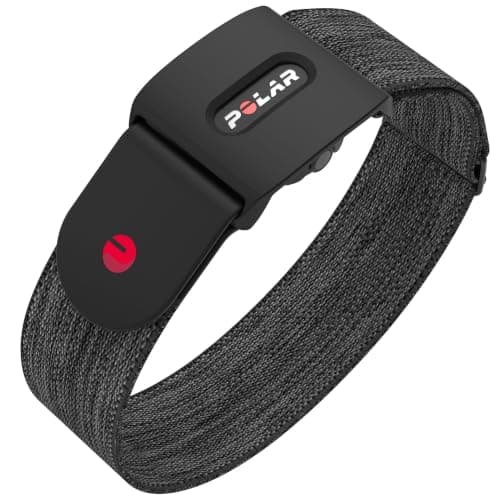
Strap-quality data without the strapPolar Verity Sense
The optical armband that measured a bias under 0.1 bpm against a chest strap on a graded treadmill test. The comfortable answer.
$104.9515% off
Price as of November 21, 2026. Prices move; Amazon's is the one that counts.
#ad · we may earn a commission from this link to Polar Verity Sense
The short answer
The top pick is the Polar Verity Sense, which is also the budget pick here - it is the cheapest device on the page: Polar states a swim mode, on-board recording and a WR50 rating, and it sits on the upper arm rather than the wrist. For a swim watch with the toughest published rating in this field, the Garmin Instinct 3 Solar at 10 ATM. If you want a dive rating rather than a swim rating, only the Apple Watch Ultra 2 publishes one.
Ranked
Quick picks
| # | Device | Best for | Evidence | Score | Price |
|---|---|---|---|---|---|
| 01 | Polar Verity Sense The optical armband that measured a bias under 0.1 bpm against a chest strap on a graded treadmill test. The comfortable answer. | Strap-quality data without the strap | Peer-reviewed validation | 8.4/10 | $89.21Amazon |
| 02 | 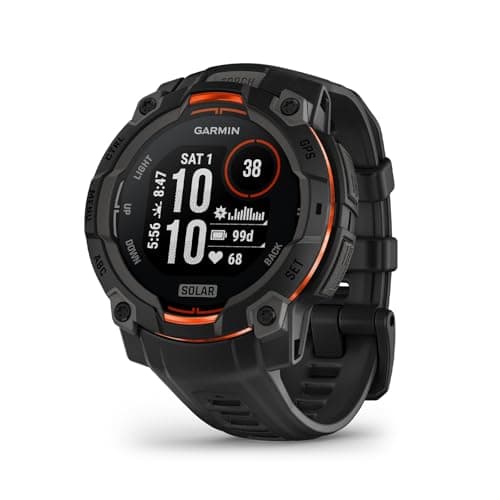 Garmin Instinct 3 Solar (45mm) The watch that wins this site's rubric by publishing an honest battery table and then filling every row of it. No maps, and it still ranks first on trail. | Multi-day trail and backcountry days | Manufacturer specification | 7.7/10 | $249.99Amazon |
| 03 | 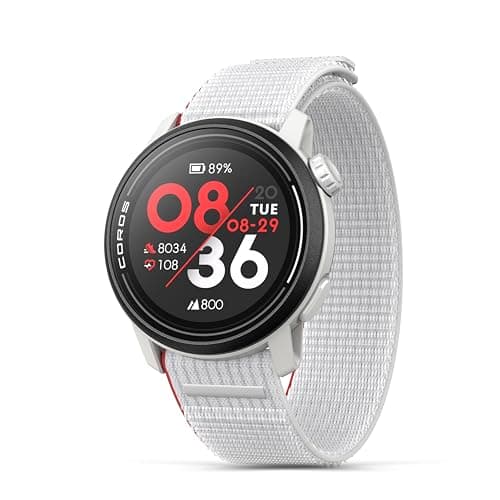 COROS PACE 3 The only budget watch on this site that anybody has actually measured. The measurement was not flattering, and we would still rather have it than nothing. | Long training weeks under $200 | Independent measured test | 7.4/10 | $199.00Amazon |
| 04 | 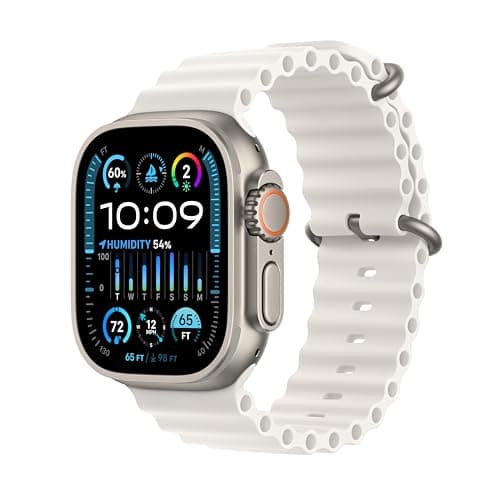 Apple Watch Ultra 2 The previous Ultra, still widely stocked and much cheaper. The same sleep-staging weakness in the published record, for roughly half the money. | iPhone owners who want an Ultra without the current price | Peer-reviewed validation | 6.8/10 | $384.99Amazon |
| 05 | 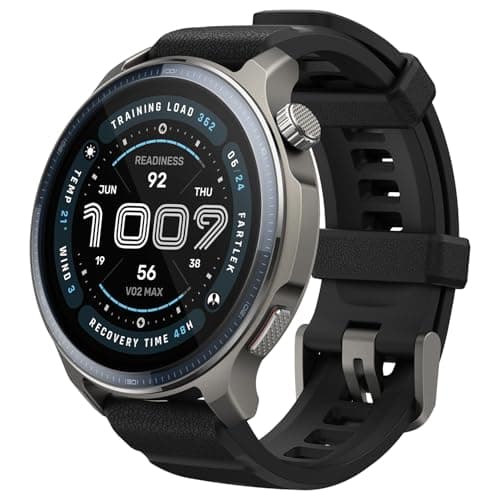 Amazfit Balance 2 The most published capability per dollar on this site, and the least checkable. Dual-band GNSS, offline maps and sapphire glass, from a brand no validation study we could find has ever included. | Spec-sheet value, if unverified data is a trade you accept | Manufacturer claim only | 6.5/10 | $199.99Amazon |
#ad· Live prices from the Amazon Product API, as of November 21, 2026. Where we have no verified live price we show none. Scores come from the published rubric at How we rank — the Evidence column shows what each ranking actually rests on, including where the answer is nothing.
Why swimming is the hardest case in this category
Three physical facts shape this entire page, and none of them is a brand opinion.
First, radio does not pass through water. A chest strap or armband that only transmits will lose its link to your watch the moment both are submerged. That is why the record-versus-transmit distinction matters more here than anywhere else on this site: a sensor with internal memory keeps the trace and syncs it afterwards, and a sensor without memory simply loses it. Polar states internal memory for one session of up to 30 hours on the H10 and explicitly no internal memory on the H9 - two straps from the same maker, one of which can swim and one of which cannot.
Second, a water rating is a specification, not a vibe. Wahoo rates the TRACKR at IPX7, which is a splash-and-immersion rating rather than a swim rating - the exact specification difference from a WR30 strap, and the reason that otherwise capable sensor does not appear below.
Third, the wrist is the worst place to measure heart rate, and water makes it worse by loosening the contact between sensor and skin on every stroke. In the 2025 placement study, 28 adults wore sensors simultaneously at wrist, forearm and upper arm against a chest strap reference; position beat brand, and the wrist was the weakest site. No swim-specific validation of any of these five devices exists that we could find, and we are not going to invent one.
1. Polar Verity Sense - the right place, with a swim mode in the specification
Polar states for the Verity Sense: optical heart rate worn on the forearm or upper arm, dual Bluetooth plus ANT+, on-board recording, a swim mode, and WR50. Read that list against the three facts above and it is close to a purpose-built answer - it records rather than relying on a link, it is rated for 50 meters, and it sits at the arm position the placement study measured as better than the wrist.
It scores 8.4 on our rubric, second only to the Polar H10, and it is under $200 today. The limit is obvious and worth stating: it is a sensor, not a watch. It will not count your lengths, show you a split or tell you the time. Pair it with a watch, or read the session afterwards.
2. Garmin Instinct 3 Solar - the toughest published rating in this field
Garmin's manual states a 10 ATM water rating for the 45 mm Solar, alongside 28 days in smartwatch mode (unlimited with solar), 40 hours GPS-only, 28 hours all-satellite, 24 hours all-satellite plus multi-band and 36 days of expedition GPS. Ten ATM is the highest swim-class rating on this page and double the 5 ATM that most running watches publish.
It scores 7.7, the joint-highest watch on this site, and it is under $500 today. Two honest limits: the solar figures are Garmin's assumption of all-day wear at 50,000 lux rather than a measurement of ours, and the display is monochrome memory-in-pixel with no maps at all. For open water, that second one matters more than it does in a pool.
3. COROS PACE 3 - the cheapest watch here that publishes a swim rating
COROS states a 1.2-inch transflective touchscreen behind mineral glass, 42 x 42 x 11.7 mm, 29-30 grams with the nylon band, a dual-frequency GPS option, 38 hours of full GPS, 15 days of regular use and 5 ATM. Thirty-eight stated GPS hours from a 30-gram watch is an unusual combination at this price, and under $200 today.
It scores 7.4, and the honest caveat belongs to this exact model: the one independent wrist heart-rate test on record for the COROS line, the5krunner's ten-mile comparison, was run on the PACE 3 and found divergence during and after rapid intensity change, with the author noting the dataset was limited. We rank it here anyway, and we print the result rather than quietly ranking it on specification alone.
4. Apple Watch Ultra 2 - the only dive rating on this page
Apple's own announcement states a 49 mm titanium case, a display reaching 3000 nits, 36 hours of regular use, up to 72 hours in Low Power Mode and a rating for recreational scuba diving to 40 meters. That is a different class of claim from every swim rating above it, and it is the reason this watch is on the page.
Three limits, stated together. Apple has retired the Ultra 2 from its current line-up and its tech-specs page no longer renders for our fetcher, so this launch announcement is the figure set we could actually read - which is why no GNSS band specification for this watch appears anywhere on this site. Thirty-six stated hours is the shortest endurance here. And it needs an iPhone. It scores 6.8.
5. Amazfit Balance 2 - 10 ATM, and a worked example of a weak claim
Amazfit states a 47.4 mm case, sapphire glass, a 1.5-inch AMOLED, 10 ATM water resistance, up to 21 days of typical use and up to 33 hours in Accuracy GPS Mode, dual-band support from six satellite systems and free offline maps. On paper it is the equal of anything here on water rating and endurance, and it is the cheapest watch on the page.
It ranks last at 6.5 because of the evidence weight rather than the hardware, and we use it as the site's clearest worked example of what that weight is for. Amazfit's published answer to the accuracy question is "industry-leading GPS accuracy" - with no method, no instrument and no figure attached. Three further absences are recorded on its own page as absences rather than as claims about the watch: it does not name VO2 max, does not state whether an external chest strap can be paired, and names only the Zepp app as a destination for your data. For a swimmer, that second absence is the important one.
What to buy
For pool heart rate, the arm sensor with on-board recording beats every watch here, costs the least, and is the top pick for exactly that reason. For lengths, splits and open water, buy a watch with a published swim rating and accept that its heart-rate trace is the weakest part of the session. Check the rating on the maker's own page before you swim in anything - the numbers above are what each maker published when we read it, and ratings are specifications, not warranties.
In full
Every pick, and why
Polar Verity Sense
The optical armband that measured a bias under 0.1 bpm against a chest strap on a graded treadmill test. The comfortable answer.
- Sensor
- Optical, forearm or upper-arm band
- Connectivity
- Bluetooth (dual) + ANT+
- Modes
- Live streaming, on-board recording, swim mode
What's good
- Sensors (2025) recorded the smallest bias of any device tested on the graded treadmill protocol — under 0.1 bpm, CCC = 0.997
- Lowest resting error in the same study, at roughly 1.6% MAPE
- Far more comfortable than a chest strap, and it works under a wetsuit
What isn't
- Still an extra device to charge and remember
- Like every optical sensor, it struggled in the same study's burpee protocol — nothing optical handles that well
Skip this if
Skip this if your training is mostly explosive, stop-start work. In the burpee protocol every optical device tested fell below 0.50 concordance, this one included. Buy the H10 for that.
What the evidence says
Peer-reviewed validationDirectly measured in Sensors (2025), n = 28, against a Polar H10 reference: lowest resting MAPE at ~1.6 ± 0.8%, and the smallest bias on the modified Bruce treadmill protocol at under 0.1 bpm (CCC = 0.997).
Show how this 8.4 was calculated
| Factor | Weight | Score |
|---|---|---|
| EvidenceDirectly measured in a peer-reviewed study, with the best result of any optical device tested. | 30% | 9.5 |
| HardwareOptical, but worn on the forearm — the placement the same study found outperforms the wrist. | 20% | 8.5 |
| Metric coverageHeart rate plus on-board recording and a swim mode. | 20% | 7.0 |
| EnduranceRechargeable, with stated endurance comfortably covering long sessions. | 15% | 8.0 |
| Cost per capabilityPriced against a good chest strap, not against a watch. | 15% | 8.5 |
$104.9515% off
Price as of November 21, 2026. Prices move; Amazon's is the one that counts.
#ad · we may earn a commission from this link to Polar Verity Sense
Garmin Instinct 3 Solar (45mm)
The watch that wins this site's rubric by publishing an honest battery table and then filling every row of it. No maps, and it still ranks first on trail.
- Battery, smartwatch (stated)
- 28 days, unlimited with solar
- Battery, GPS-only (stated)
- 40 h, up to 130 h with solar
- Battery, multi-band (stated)
- 24 h, up to 40 h with solar
- Battery, expedition (stated)
- 36 days, unlimited with solar
- Water rating
- 10 ATM
What's good
- Garmin publishes five separate GPS endurance figures for it, mode by mode — the most honest battery table of any watch on this site
- 24 stated hours in all-satellite multi-band mode, which is the mode you would actually run for accuracy
- Solar charging turns the smartwatch and expedition figures into 'unlimited' under Garmin's stated light conditions
What isn't
- No built-in maps at all, which on unfamiliar trail is the feature people miss first
- No independent validation of its heart rate or positioning that we could find
Skip this if
Skip this if you navigate unfamiliar routes rather than repeat known ones. Breadcrumb navigation on a trail you have never run is a genuinely worse experience than a map, and no amount of battery compensates for it.
What the evidence says
Manufacturer specificationNo independent validation of this device that we could find. What Garmin does publish is unusually complete: a five-row battery table naming each satellite mode separately, with the solar-assisted figures stated separately from the unassisted ones. We rank the unassisted multi-band row, because that is the number you can rely on in a forest.
Show how this 7.7 was calculated
| Factor | Weight | Score |
|---|---|---|
| EvidenceNo measured validation, but the published specification is more granular and more honest about its own assumptions than any other spec sheet here. | 30% | 5.5 |
| HardwareAll-satellite plus multi-band positioning, a solar charging lens and a 10 ATM case. | 20% | 8.5 |
| Metric coverageFull Garmin training and outdoor feature set, minus maps — which on trail is a real omission. | 20% | 7.5 |
| Endurance40 stated GPS-only hours, 24 in multi-band, 28 smartwatch days and 36 expedition days, before solar is counted at all. | 15% | 10.0 |
| Cost per capabilityFlagship endurance at roughly a third of flagship money. | 15% | 9.0 |
$399.9938% off
Price as of November 21, 2026. Prices move; Amazon's is the one that counts.
#ad · we may earn a commission from this link to Garmin Instinct 3 Solar (45mm)
COROS PACE 3
The only budget watch on this site that anybody has actually measured. The measurement was not flattering, and we would still rather have it than nothing.
- Display
- 1.2" transflective touchscreen, mineral glass
- Size
- 42 × 42 × 11.7 mm, 29-30 g with the nylon band
- Satellite
- GPS/QZSS, GLONASS, BeiDou, with a dual-frequency GPS option
- Battery (stated)
- 15 days regular use / 38 h full GPS
- Water rating
- 5 ATM
What's good
- 38 manufacturer-stated GPS hours at the bottom of the market — more than watches costing three times as much
- Transflective screen gets more readable in bright sun rather than less
- Dual-frequency GPS is available at a price where it usually is not
What isn't
- It is the device in the one independent heart-rate test we found, and it lost that test
- The transflective display looks flat indoors next to an AMOLED
Skip this if
Skip this if wrist heart rate during intervals is the reason you are shopping. This is the watch that was measured diverging during exactly that, and a cheaper watch does not become more accurate because you wanted it to.
What the evidence says
Independent measured testThe5krunner's measured 10-mile comparison tested THIS watch — not a sibling, not a predecessor — against a Garmin HRM-Pro Plus and a Polar Verity Sense, and found its wrist heart rate diverged during and after rapid intensity change. The author cautions the dataset was limited. It is the only current budget watch on this site with any independent measurement at all, which is why it scores above devices with nothing.
Show how this 7.4 was calculated
| Factor | Weight | Score |
|---|---|---|
| EvidenceAn actual independent measured test of this exact watch exists — and it was unfavorable, on a limited dataset. Having been measured is worth something; having been measured badly caps it. | 30% | 5.0 |
| HardwareDual-frequency GPS option and a transflective display, per the COROS spec page. | 20% | 7.5 |
| Metric coverageFull COROS training platform; no maps and a narrower third-party ecosystem than Garmin. | 20% | 7.5 |
| Endurance38 stated hours of full GPS and 15 days of regular use, at this price. | 15% | 9.5 |
| Cost per capabilityOne of the two strongest dollars-per-GPS-hour figures on the site. | 15% | 9.5 |
Price as of November 21, 2026. Prices move; Amazon's is the one that counts.
#ad · we may earn a commission from this link to COROS PACE 3
Apple Watch Ultra 2
The previous Ultra, still widely stocked and much cheaper. The same sleep-staging weakness in the published record, for roughly half the money.
- Case
- 49mm titanium
- Display
- Apple states up to 3000 nits
- Battery (stated)
- 36 h regular use / 72 h Low Power Mode
- Water
- Recreational scuba to 40 meters
What's good
- 36 stated hours of regular use, which is long for a smartwatch and short for a sports watch
- Materially cheaper than the Ultra 3 while running the same watchOS training features
- Titanium, a 40-meter dive rating and a display Apple states reaches 3000 nits
What isn't
- The published sleep evidence for Apple's platform is the weakest deep-sleep result of the three devices in the Brigham and Women's study
- Apple no longer publishes a tech-specs page for it that we could read, so we will not assert its GNSS band specification
Skip this if
Skip this if you are buying a watch to fix your sleep data or to record 12-hour days. Neither is what an Apple Watch is best at, and the published record says so on the first count.
What the evidence says
Peer-reviewed validationRobbins et al. (2024) tested the Apple Watch Series 8 against polysomnography: 75.0% four-stage agreement with deep-sleep sensitivity of 50.5%, the weakest of the three devices tested. That was the Series 8, not the Ultra 2, and Apple has revised its staging since — but it is the only peer-reviewed sleep measurement of Apple's platform we have, and it is the same platform.
Show how this 6.8 was calculated
| Factor | Weight | Score |
|---|---|---|
| EvidencePeer-reviewed sleep data exists for the platform and it was unfavorable; the tested device was a sibling, not this watch. | 30% | 6.0 |
| HardwareTitanium, a 3000-nit display and a 40-meter dive rating; a generation behind the Ultra 3, with no readable band-level GNSS specification. | 20% | 8.0 |
| Metric coverageVery wide metric coverage inside Apple's ecosystem; export off-platform is more awkward than Garmin's. | 20% | 8.5 |
| Endurance36 stated hours of regular use is short against every dedicated sports watch here. | 15% | 4.0 |
| Cost per capabilityRoughly half the Ultra 3's sticker for the same watchOS feature set — the clearest value case in Apple's line. | 15% | 7.5 |
Price as of November 21, 2026. Prices move; Amazon's is the one that counts.
#ad · we may earn a commission from this link to Apple Watch Ultra 2
Amazfit Balance 2
The most published capability per dollar on this site, and the least checkable. Dual-band GNSS, offline maps and sapphire glass, from a brand no validation study we could find has ever included.
- Case
- 47.4mm x 12.3mm, aluminum frame, sapphire lens
- Satellite
- Dual-band, six satellite systems (manufacturer-stated)
- Battery (stated)
- 21 days typical / 33 h Accuracy GPS Mode
- Maps
- Free offline maps, turn-by-turn, offline routing
- Water
- 10 ATM (manufacturer-stated)
What's good
- Publishes dual-band GNSS, free offline maps, sapphire glass and 10 ATM at a list price where Garmin publishes none of the four
- 33 stated hours in its dual-band Accuracy GPS Mode — roughly double what a similarly priced watch here states in its own best-accuracy mode
- No subscription named anywhere on the page for workout and recovery data, which is not true of every rival in this category
What isn't
- Near the bottom of our evidence hierarchy, and worse than empty: Amazfit answers the accuracy question with the phrase "industry-leading GPS accuracy" and publishes no method, no reference instrument and no figure
- Amazfit's own specification page does not name VO2 max, does not state whether a chest strap can be paired, and names no companion app other than Zepp
- Nobody outside the company appears to have measured any Amazfit against a reference in anything we were able to read
Skip this if
Skip this if the reason you are upgrading is that you stopped trusting your current watch's numbers. Buying a better spec sheet from a brand with no measurement record does not fix that problem, it relocates it — and if a chest strap is part of your plan, Amazfit's page does not say this watch will talk to one.
What the evidence says
Manufacturer claim onlyNo peer-reviewed validation, no independent measured test and no published method of any kind for this watch, and we found no validation of any Amazfit device in anything we were able to read — the brand was not among the eight watches in Gilgen-Ammann et al. (2020), not in Robbins et al. (2024) and not in Dial et al. (2025). Amazfit does publish an accuracy claim: its own FAQ answers "how accurate is the GPS" with "industry-leading GPS accuracy". That is a manufacturer claim with no method behind it, which is the second-weakest tier we have.
Show how this 6.5 was calculated
| Factor | Weight | Score |
|---|---|---|
| EvidenceHalf a point BELOW the floor we give a maker with simply no measurement record, because Amazfit does not merely lack a validation — it publishes an accuracy claim with no method, no reference and no number attached, which is the specific failure this site exists to flag. | 30% | 2.5 |
| HardwareDual-band reception across six stated constellations, a sapphire lens, a 658 mAh cell, 10 ATM and a 2,000-nit 1.5-inch AMOLED. On published hardware this is the strongest specification at its price anywhere on this site. | 20% | 8.5 |
| Metric coverageTraining Load, Recovery Status, HybridCharge, Zepp Coach, sleep HRV, blood oxygen, stress, 180+ sports modes and genuinely free offline maps. Marked down for what the page does not say: no VO2 max, no statement that an external heart-rate strap can be paired, and no route out of the Zepp app described anywhere on it. | 20% | 6.5 |
| Endurance21 stated days of typical use and 33 stated hours in the dual-band Accuracy GPS Mode — the best stated endurance per dollar on this site, and stated in the accuracy mode rather than a flattering power-saving one. | 15% | 9.0 |
| Cost per capabilityLists at $299.99, sells below it, and delivers dual-band GNSS plus offline maps for less than half what the cheapest Garmin with both costs. On arithmetic alone this is the best cost-per-published-capability figure here. | 15% | 9.0 |
$219.999% off
Price as of November 21, 2026. Prices move; Amazon's is the one that counts.
#ad · we may earn a commission from this link to Amazfit Balance 2
How this ranking was built
Every score on this page comes from one published rubric, applied identically to every device on the site, with the weights written down and the inputs shown. We have not worn any of these devices and we never say we have. Read the method and check us.
Show your working
Sources
Every one of these was read in full before it was cited. Where we could not access a paper, we do not quote its numbers.
- [1]Manufacturer specification2026Polar — Verity Sense published specifications
Manufacturer-stated: optical heart rate worn on the forearm or upper arm, dual Bluetooth plus ANT+, on-board recording, swim mode, WR50.
- [2]Manufacturer specification2026Polar — H10 heart rate sensor published specifications
Manufacturer-stated: electrical (ECG) measurement, Bluetooth LE + ANT+, internal memory for one session up to 30 hours, up to 400 h on a CR2025 coin cell, WR30.
- [3]Manufacturer specification2026Wahoo — TRACKR Heart Rate published specifications
Manufacturer-stated, read 2026-08-18: rechargeable lithium-ion battery with over 100 active hours, ANT+ plus up to three simultaneous Bluetooth connections, IPX7 rating, and in-activity heart-rate capture with an activity summary in the Wahoo app. IPX7 is a splash-and-immersion rating, not a swim rating — which is the specification difference from a WR30 strap.
- [4]Peer-reviewed validation2025“Impact of Anatomical Placement on the Accuracy of Wearable Heart Rate Monitors During Rest and Various Exercise Intensities”, Sensors (Basel)
n = 28 (14 male, 14 female). Polar H10 chest strap as the reference. Compared Polar Verity Sense (forearm), Garmin Forerunner 55 (wrist) and three simultaneous Whoop 4.0 units at wrist, forearm and upper arm, across rest, cycling warm-up, burpees and a modified Bruce treadmill protocol.
- [5]Manufacturer specification2026Garmin — Instinct 3 Solar owner’s manual, battery life information
Manufacturer-stated for the 45 mm Solar: 28 days smartwatch (unlimited with solar), 40 hours GPS-only (130 hours with solar), 28 hours all-satellite (50 with solar), 24 hours all-satellite plus multi-band (40 with solar), 36 days expedition GPS (unlimited with solar), 65 days battery-saver. Water rating 10 ATM per the same manual’s specification page. Solar figures assume all-day wear in 50,000 lux conditions, which is Garmin’s assumption and not a measurement of ours.
- [6]Manufacturer specification2026COROS — PACE 3 published specifications
Manufacturer-stated: 1.2" transflective touchscreen with mineral glass, 42 × 42 × 11.7 mm, 29-30 g with the nylon band, GPS/QZSS/GLONASS/BeiDou with a dual-frequency GPS option, 38 hours of full GPS, 15 days of regular use, 5 ATM.
- [7]Independent measured test2023the5krunner, measured heart-rate comparison of the COROS PACE 3
An independent measured test, not a peer-reviewed study, and the author explicitly cautions the dataset was limited. Compared against Garmin HRM-Pro Plus and Polar Verity Sense across easy runs, intervals and cycling. Found divergence during and after rapid intensity change. Tests the PACE 3, not the PACE 4.
- [8]Manufacturer specification2023Apple — “Apple unveils Apple Watch Ultra 2”, published specifications
Manufacturer-stated, read 2026-08-18: 49 mm titanium case, a display Apple states reaches 3000 nits, 36-hour battery life in regular use and up to 72 hours in Low Power Mode, and a rating for recreational scuba diving to 40 meters. Apple has retired the Ultra 2 from its current line-up and its tech-specs page no longer renders for our fetcher, so this launch announcement is the published figure set we could actually read — which is why no GNSS band specification for this watch appears anywhere on this site.
- [9]Manufacturer specification2026Amazfit — Balance 2 product page and specification table (US)
Manufacturer-stated, read 2026-11-01. Case 47.4 mm diameter and 12.3 mm thick excluding the heart-rate sensor, aluminum alloy frame with a fiber-reinforced polymer case, scratch-resistant sapphire glass lens, 1.5-inch AMOLED at a stated 2,000 nits peak brightness, 10 ATM water resistance, a 658 mAh battery stated at “up to 21 days” of typical use and up to 33 hours in Accuracy GPS Mode, “dual-band support from six satellite systems”, free downloadable offline maps with turn-by-turn directions and offline route planning, 180+ sports modes, BioTracker monitoring of heart rate, sleep, blood oxygen and stress plus sleep HRV, Training Load, Recovery Status, HybridCharge and Zepp Coach, and “no subscription workout and recovery data in the Zepp App”. List price $299.99. THREE ABSENCES, recorded as absences rather than as claims about what the watch cannot do: the page does not name VO2 max, does not state whether external Bluetooth or ANT+ sensors such as a chest strap can be paired, and does not describe export to any third-party service — the companion app it names is Zepp and only Zepp. Amazfit's specification table also runs several Balance models in unlabeled adjacent columns, so figures that appear in only one column are not quoted here.
- [10]Manufacturer claim only2026Amazfit — FAQ, “How accurate is the GPS on the Amazfit Balance 2?”
Read 2026-11-01. Amazfit's own answer to the accuracy question is the phrase “industry-leading GPS accuracy”, supported by “dual-band support from six satellite systems” and a promise of a “fast and reliable connection, even in challenging environments”. No methodology, no reference instrument, no measured figure and no named test appear anywhere on the page. This is the textbook case for the bottom two tiers of our evidence hierarchy: a claim about accuracy, published by the manufacturer, with nothing attached that anyone outside the company could check.
Read next
Related
- Best heart rate monitors for swimming
The sensor-only version of this question, with the memory rule in full.
- Best multisport watches
If the swim is one leg of three rather than the whole session.
- Heart rate accuracy by device
Every published measurement on this site, device by device.
- Best fitness trackers under $300
Three of these five sit in that bracket at today's prices.