The evidence scoreboard
The best fitness trackers with ECG
On a chest strap, ECG is the measurement. On a watch, it is a separate rhythm feature that does not touch the heart-rate number your training is scored on. This page ranks both and never confuses them.
We earn a commission when you buy through our Amazon links, at no extra cost to you. It never decides a ranking — the rubric that does is published in full, so you can check us rather than take our word for it. How this works.
Top pick
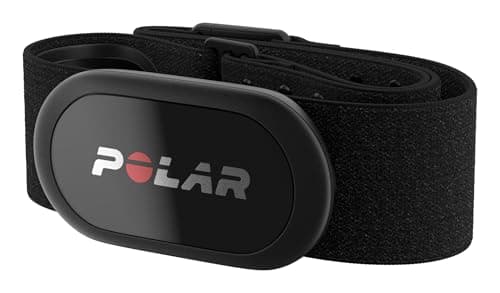
Anyone who trains by heart ratePolar H10
The device other people's validation studies use as the reference. That is the strongest recommendation a sensor can have.
$104.9515% off
Price as of November 21, 2026. Prices move; Amazon's is the one that counts.
#ad · we may earn a commission from this link to Polar H10
The short answer
The top pick and the budget pick are the same thing here, because the cheapest device on this page is also the best one: the Polar H10, whose ECG electrodes are the measurement, in every session, and which researchers repeatedly choose as their reference instrument. If you want a wrist ECG feature on a training watch, the Polar Grit X2 Pro publishes one alongside a dual-frequency receiver. Be clear about which of the two things you are buying, because they are not the same purchase.
Ranked
Quick picks
| # | Device | Best for | Evidence | Score | Price |
|---|---|---|---|---|---|
| 01 | Polar H10 The device other people's validation studies use as the reference. That is the strongest recommendation a sensor can have. | Anyone who trains by heart rate | Peer-reviewed validation | 8.9/10 | $89.20Amazon |
| 02 | 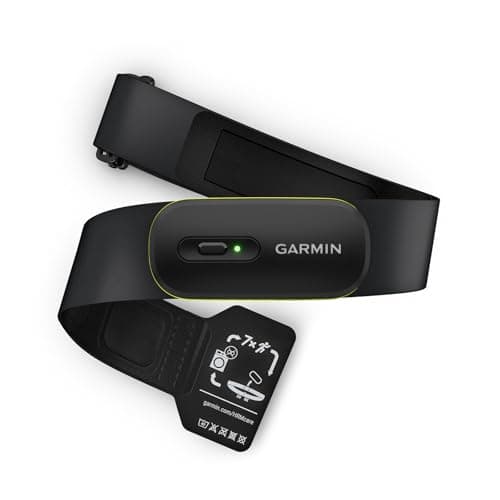 Garmin HRM 600 The strap to buy if you are already inside Garmin's ecosystem and want running dynamics with it. | Garmin owners wanting running dynamics | Manufacturer specification | 7.4/10 | $154.99Amazon |
| 03 | 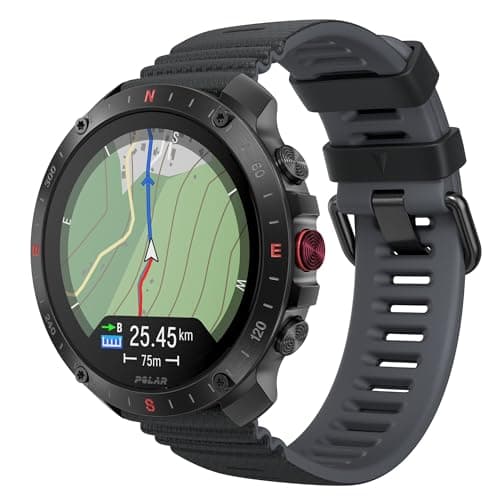 Polar Grit X2 Pro Sapphire, steel, offline maps and 43 stated training hours — and the one Polar watch family that has been measured for nocturnal HRV came last of five. | Trail navigation with a full sensor set | Peer-reviewed validation | 7.4/10 | $878.96Amazon |
| 04 | 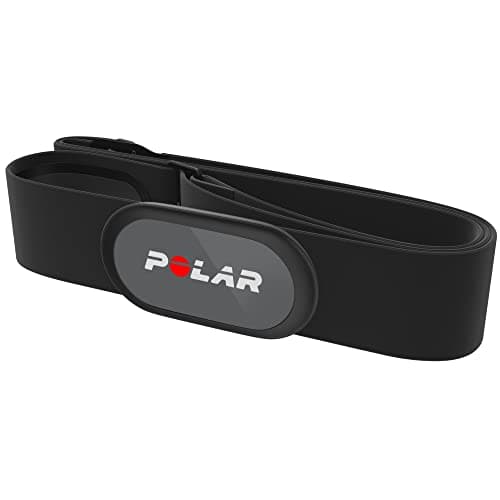 Polar H9 The H10 with the recording memory removed. If you always ride with a head unit, that is a feature you were never going to use. | Riders who always have a head unit running | Manufacturer specification | 7.3/10 | $69.90Amazon |
| 05 | 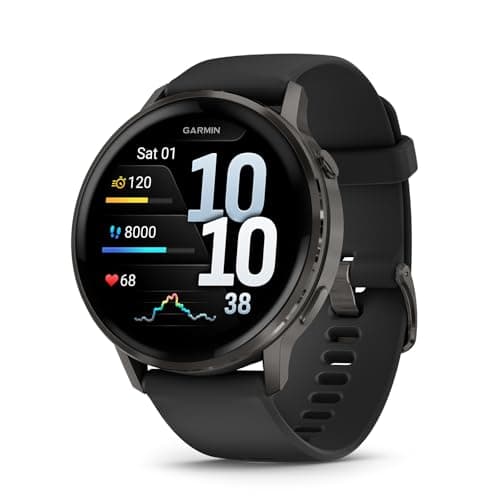 Garmin Venu 4 A Forerunner's training stack in a steel lifestyle case, with a longer published battery than the running watch it is priced against. | One watch for training data and everyday wear | Manufacturer specification | 7.1/10 | $449.00Amazon |
#ad· Live prices from the Amazon Product API, as of November 21, 2026. Where we have no verified live price we show none. Scores come from the published rubric at How we rank — the Evidence column shows what each ranking actually rests on, including where the answer is nothing.
Two completely different products share one word
"ECG" appears on the spec sheet of a $35 chest strap and on the spec sheet of a $700 watch, and it means something different in each case. This page exists because that ambiguity costs people money.
On a chest strap, the electrodes against your skin pick up the heart's electrical signal directly, and that signal is the heart-rate reading - continuously, for every minute of every session. Polar states this plainly for the H10 and the H9: "electrical (ECG) measurement". We explain the physics at how chest strap monitors work.
On a watch, an ECG app is a separate, occasional feature: you hold still, touch the bezel or a button, and the watch records a short single-lead trace for a rhythm check. It does not replace the optical sensor. Every heart-rate number that watch feeds into your training load, your zones and your recovery score still comes from green light shone at your wrist, which is the weakest measurement site in the 2025 placement study - a study that used a chest ECG strap as its reference, not a watch's ECG app.
That asymmetry is the whole ranking. Nobody has ever designed a validation study around a watch's ECG feature as the criterion instrument. They choose chest electrodes, every time. So does this page.
1. Polar H10 - the one the measurement is built on
Polar states electrical (ECG) measurement, Bluetooth LE plus ANT+, internal memory for one session of up to 30 hours, up to 400 hours on a CR2025 coin cell and a WR30 water rating. It scores 8.9 on our rubric, the highest score on this site, and under $200 today.
The strongest claim we can make for it is also the most unusual kind of evidence: this is the device researchers chose as their reference. It was the criterion instrument in the placement study above and has been used as the reference across published overnight work. That is a revealed preference by people with no commercial interest, and it is explicitly nota measurement of the H10's own error - if the H10 carries a systematic bias, every number on this site inherits it. Don't buy it if you will not wear a strap; an unworn sensor measures nothing.
2. Garmin HRM 600 - the same principle, inside Garmin's ecosystem
If your watch is a Garmin, the strap that slots into it without friction is the HRM 600. Garmin's manual states a rechargeable lithium-ion battery rated up to 2 months at 1 hour per day, a 5 ATM water rating, an operating range of 0 to 40 degrees Celsius and a 2.4 GHz radio at 9.9 dBm maximum, and describes the strap as providing real-time heart rate and HRV data, running dynamics and stand-alone activity recording. Garmin's own buying guide attributes step speed loss, stride length, vertical oscillation and ground contact time balance to this strap specifically.
It scores 7.4. What you pay for over the H10 is the running-dynamics layer and native Garmin integration; what you do not get is an independent validation record, because none exists for it.
3. Polar Grit X2 Pro - the best wrist ECG implementation here
If what you actually want is the rhythm feature on your wrist, Polar states for the Grit X2 Pro: a 1.39-inch AMOLED at 454 x 454 behind sapphire glass, a stainless steel case, dual-frequency GPS plus GLONASS, Galileo, BeiDou and QZSS, 43 hours in training mode with GPS, 10 days in smartwatch mode, WR100, on-wrist ECG, skin temperature and SpO2 sensors, and offline maps preinstalled for North America and Europe.
It scores 7.4, and it is the only watch on this page whose brand carries a favorable independent positioning result - with the caveat we print every time, that Gilgen-Ammann et al. (2020) tested older single-frequency Polar watches, not this one. Skip it if the ECG app was the whole reason: a strap at a fraction of the price changes your training numbers, and this feature does not.
4. Polar H9 - the budget electrode, with one specification missing
Polar states electrical (ECG) measurement, Bluetooth LE plus ANT+ plus 5 kHz analog, up to 400 hours on a replaceable coin cell and WR30 - and no internal memory. That last absence is the whole difference from the H10: the H9 cannot record a session on its own, so it must stay in radio contact with a watch or head unit the entire time. If you always have a display running, the saving is real and nothing is lost. It scores 7.3.
5. Garmin Venu 4 - the ECG app with Garmin's own footnotes attached
Garmin's press release names the Garmin ECG App among the Venu 4's features - and in the same document states that the app requires the latest software and is available only in select regions, for ages 22 and over. We quote the footnote because it is the part that decides whether you can use the feature at all. The same release names Health status as "currently in beta" and Pulse Ox as "not available in all countries".
The rest of the watch is strong: 17 stated hours of all-satellite plus multi-band at 45 mm and documented ANT+ and Bluetooth strap pairing. It scores 7.1 and ranks last here for the reason this page keeps repeating: the feature in the headline is not the feature that measures your training.
The honest summary
A wrist ECG app is a rhythm check. A chest ECG sensor is a measurement instrument. If you want a device that makes your heart-rate data better, buy one of the three straps above - the cheapest device on the page is also the top pick, which does not happen often. If you want a wrist rhythm feature for peace of mind, buy one of the two watches, and understand that the optical sensor on the back is still what your training numbers rest on. Neither of these devices is a medical device, and nothing on this page is medical advice.
In full
Every pick, and why
Polar H10
The device other people's validation studies use as the reference. That is the strongest recommendation a sensor can have.
- Sensor
- Electrical (ECG), chest strap
- Connectivity
- Bluetooth LE + ANT+
- Memory
- One session, up to 30 hours
- Battery (stated)
- Up to 400 h, CR2025 coin cell
- Water rating
- WR30
What's good
- Used as the criterion measure in published research — including the 2025 Sensors placement study on this site
- Simultaneous Bluetooth and ANT+, so it pairs to a watch and a bike computer at once
- 400 stated hours on a coin cell you replace rather than recharge
What isn't
- It is a chest strap, and a chest strap is less comfortable than a watch
- The strap wears out well before the sensor does
Skip this if
Skip this if you know yourself well enough to know you will not wear it. An unworn ECG strap measures nothing, and a wrist sensor you actually wear beats it every time.
What the evidence says
Peer-reviewed validationUsed as the reference standard in Sensors (2025), the anatomical-placement study of 28 participants. Being chosen as the criterion is an implicit validation by the researchers, though it means the study cannot measure the H10's own error.
Show how this 8.9 was calculated
| Factor | Weight | Score |
|---|---|---|
| EvidenceResearchers use it as the criterion measure. Nothing else in this category has a stronger evidentiary position. | 30% | 10.0 |
| HardwareElectrical ECG measurement rather than optical — a different and better physical principle for this job. | 20% | 9.5 |
| Metric coverageHeart rate and R-R intervals only; it does not pretend to do anything else. | 20% | 6.5 |
| Endurance400 stated hours on a replaceable coin cell. | 15% | 9.5 |
| Cost per capabilityInexpensive next to any watch, and it outlasts several of them. | 15% | 8.5 |
$104.9515% off
Price as of November 21, 2026. Prices move; Amazon's is the one that counts.
#ad · we may earn a commission from this link to Polar H10
Garmin HRM 600
The strap to buy if you are already inside Garmin's ecosystem and want running dynamics with it.
- Sensor
- Electrical (ECG), chest strap
- Extras
- Running dynamics, HRV data, on-board storage
What's good
- Adds running dynamics that a watch alone cannot compute
- Stores data when out of watch range and syncs later
What isn't
- Costs meaningfully more than the Polar H10 without a published validation advantage
- Its extra metrics only fully surface inside Garmin's own platform
Skip this if
Skip this if you just want accurate heart rate. You would be paying a premium over the H10 for running-dynamics metrics most runners look at twice and never again.
What the evidence says
Manufacturer specificationGarmin publishes specifications but no validation study we could find. It is an electrical chest strap, which is the right physical principle — but 'right principle' is not the same as 'measured accuracy'.
Show how this 7.4 was calculated
| Factor | Weight | Score |
|---|---|---|
| EvidenceCorrect sensor principle, detailed published specs, no independent validation we could find. | 30% | 6.0 |
| HardwareElectrical ECG measurement with on-board storage. | 20% | 9.0 |
| Metric coverageHeart rate, HRV and the full running-dynamics set. | 20% | 8.5 |
| EnduranceGood stated endurance; rechargeable. | 15% | 8.0 |
| Cost per capabilityA clear premium over the H10 without a matching evidence advantage. | 15% | 6.0 |
$169.999% off
Price as of November 21, 2026. Prices move; Amazon's is the one that counts.
#ad · we may earn a commission from this link to Garmin HRM 600
Polar Grit X2 Pro
Sapphire, steel, offline maps and 43 stated training hours — and the one Polar watch family that has been measured for nocturnal HRV came last of five.
- Display
- 1.39" AMOLED, 454 × 454, sapphire glass
- Case
- Stainless steel
- Satellite
- Dual-frequency GPS, plus GLONASS, Galileo, BeiDou, QZSS
- Battery (stated)
- 10 days smartwatch / 43 h training with GPS
- Extras
- On-wrist ECG, skin temperature, SpO2, offline maps
What's good
- 43 stated hours in training mode with GPS, which is flagship endurance in an AMOLED watch
- Offline maps preinstalled for North America and Europe, rather than downloaded per region
- Sapphire over stainless steel is the most durable material pairing in this roundup
What isn't
- The nocturnal HRV validation of its predecessor, the Grit X Pro, was the weakest of the five devices tested — MAPE 16.3% against an ECG reference
- Priced against the fēnix tier without Garmin's third-party ecosystem
Skip this if
Skip this if you bought it for the recovery score. The only published nocturnal HRV measurement of a Polar watch is of this watch's predecessor, and it finished last of five devices against an ECG reference. The chest strap from the same company is the reference standard; the watch is not.
What the evidence says
Peer-reviewed validationTwo peer-reviewed results touch this device, and they point opposite ways. Gilgen-Ammann et al. (2020) found only Polar's receivers stayed under 5% distance error across eight watches — dated, brand-level, and about earlier models. Dial et al. (2025) measured the Polar Grit X Pro, this watch's direct predecessor, over 206 nights against an ECG reference and recorded the weakest HRV agreement of five devices (CCC 0.82, MAPE 16.32 ± 24.39%) and the weakest resting heart rate (CCC 0.86). Neither study tested the X2 Pro itself.
Show how this 7.4 was calculated
| Factor | Weight | Score |
|---|---|---|
| EvidencePolar carries the only favorable peer-reviewed positioning result in the category and the weakest measured HRV agreement in the newest study. Both are about predecessors; averaging them honestly lands mid-pack. | 30% | 6.0 |
| HardwareDual-frequency GPS, sapphire over steel, plus ECG, skin temperature and SpO2 sensors. | 20% | 9.0 |
| Metric coverageOffline maps preinstalled, a very wide sensor set and Polar's recovery platform. | 20% | 9.0 |
| Endurance43 stated training hours with GPS and 10 smartwatch days behind an AMOLED screen. | 15% | 8.5 |
| Cost per capabilityFlagship pricing against a smaller ecosystem, and the HRV evidence does not support the premium. | 15% | 5.0 |
$999.9912% off
Price as of November 21, 2026. Prices move; Amazon's is the one that counts.
#ad · we may earn a commission from this link to Polar Grit X2 Pro
Polar H9
The H10 with the recording memory removed. If you always ride with a head unit, that is a feature you were never going to use.
- Sensor
- Electrical (ECG), chest strap
- Connectivity
- Bluetooth LE + ANT+ 2.1 + 5 kHz analog
- Memory
- None — it cannot record on its own
- Battery (stated)
- Up to 400 h, replaceable 160 mAh coin cell
- Water rating
- WR30
What's good
- Electrical measurement — the same physical principle as the strap researchers use as their reference
- 5 kHz analog on top of Bluetooth and ANT+, which is what old gym cardio equipment actually listens for
- 400 stated hours on a coin cell you replace rather than recharge
What isn't
- No internal memory, so it cannot record a session without a paired device — this is the specification difference from the H10
- No independent validation of the H9 itself that we could find; the studies use the H10
Skip this if
Skip this if you ever want heart rate from a session you rode without your watch or head unit. The H10 stores 30 hours on its own; this stores nothing, and no firmware adds memory that is not there.
What the evidence says
Manufacturer specificationNo validation study of the H9 specifically that we could find. It shares the electrode and sensing principle of the H10 that researchers use as their criterion measure, which is a good reason to expect it to be accurate and not a measurement of it. We score the principle, not the assumption.
Show how this 7.3 was calculated
| Factor | Weight | Score |
|---|---|---|
| EvidenceCorrect sensing principle from the brand researchers pick as their reference — but no measurement of this device, and we do not let a sibling's record transfer. | 30% | 5.5 |
| HardwareElectrical ECG measurement with three radios, including the 5 kHz analog that gym equipment uses. | 20% | 8.5 |
| Metric coverageHeart rate only, and unlike the H10 it cannot record without a paired device. | 20% | 5.5 |
| Endurance400 stated hours on a replaceable coin cell. | 15% | 9.5 |
| Cost per capabilityMeaningfully cheaper than the H10 for the same measurement principle. | 15% | 9.5 |
Price as of November 21, 2026. Prices move; Amazon's is the one that counts.
#ad · we may earn a commission from this link to Polar H9
Garmin Venu 4
A Forerunner's training stack in a steel lifestyle case, with a longer published battery than the running watch it is priced against.
- Case
- 41mm or 45mm, AMOLED, stainless steel
- Satellite
- Multi-band GNSS (manufacturer-stated)
- Battery (stated)
- 12 days smartwatch / 17 h multi-band (45mm)
- Extras
- ECG app, LED flashlight, speaker and microphone
- Sensors
- Pairs ANT+ / Bluetooth straps, including the HRM 600
What's good
- Garmin's own manual gives it the Forerunner analysis stack — training status, acute load, training readiness, PacePro, performance measurements, running dynamics
- Publishes an all-satellite-plus-multi-band battery row, which the Venu line did not before: 17 stated hours at 45 mm
- Pairs the chest straps that actually improve its heart-rate data, HRM 600 and HRM 200 included
What isn't
- No independent validation of anything it measures, and the health features Garmin leads with are the newest and least checked
- Garmin labels the health status feature beta itself, and restricts the ECG app by region and to ages 22 and over
- No maps, and the 41 mm case states materially shorter battery than the 45 mm in every mode
Skip this if
Skip this if you are buying it for the health screening. Nothing published validates Garmin's sleep staging, its HRV figure came last of five brands in the only study that measured several at once, and the headline health-status feature is in beta by Garmin's own footnote. Buy it for the watch, not for the diagnosis.
What the evidence says
Manufacturer specificationNo independent validation of this model exists that we could find — not of its optical heart rate, not of its sleep staging, not of its positioning. Garmin was absent from the Robbins et al. (2024) polysomnography comparison entirely, and in the one study that wore three brands at once (Dial et al., 2025) the Garmin device finished last of five on nocturnal HRV agreement.
Show how this 7.1 was calculated
| Factor | Weight | Score |
|---|---|---|
| EvidenceDetailed published specification and a documented feature list, and no independent measurement of a single number this watch produces. | 30% | 4.5 |
| HardwareMulti-band GNSS, Garmin's Elevate wrist sensor, ECG electrodes, speaker and microphone, 5 ATM, and ANT+/Bluetooth pairing for external sensors — the same hardware checklist as a current Forerunner, in a stainless case. | 20% | 9.0 |
| Metric coverageTraining status, acute load, training readiness, PacePro, VO2 max, running dynamics, a swim test, HRV status, Body Battery, Pulse Ox, skin temperature and an ECG app. No maps, which is the one gap against the tier above. | 20% | 9.0 |
| EnduranceGarmin states 12 smartwatch days and 17 hours in all-satellite-plus-multi-band at 45 mm. Longer than the Forerunner it shares a price with, and half a fēnix 8. | 15% | 7.0 |
| Cost per capabilityLists at the same $549.99 as the Forerunner 570 and carries the better dollars-per-stated-multi-band-hour figure — but the premium over a 265 buys a metal case, a speaker and a flashlight, not better measurement. | 15% | 7.5 |
$549.9918% off
Price as of November 21, 2026. Prices move; Amazon's is the one that counts.
#ad · we may earn a commission from this link to Garmin Venu 4
How this ranking was built
Every score on this page comes from one published rubric, applied identically to every device on the site, with the weights written down and the inputs shown. We have not worn any of these devices and we never say we have. Read the method and check us.
Show your working
Sources
Every one of these was read in full before it was cited. Where we could not access a paper, we do not quote its numbers.
- [1]Manufacturer specification2026Polar — H10 heart rate sensor published specifications
Manufacturer-stated: electrical (ECG) measurement, Bluetooth LE + ANT+, internal memory for one session up to 30 hours, up to 400 h on a CR2025 coin cell, WR30.
- [2]Manufacturer specification2026Polar — H9 heart rate sensor published specifications
Manufacturer-stated: electrical (ECG) measurement, Bluetooth LE + ANT+ 2.1 + 5 kHz analog, up to 400 hours on a replaceable 160 mAh coin cell, WR30. No internal memory — the H9 cannot record a session on its own, which is the specification difference from the H10.
- [3]Manufacturer specification2026Garmin — HRM 600 owner’s manual, specifications
Manufacturer-stated, read 2026-08-18: rechargeable lithium-ion battery rated up to 2 months at 1 hour per day, 5 ATM water rating, operating range 0 to 40 °C, charging range 15 to 42 °C, 2.4 GHz radio at 9.9 dBm maximum. Garmin describes the strap as providing real-time heart rate and HRV data, running dynamics and stand-alone activity recording.
- [4]Manufacturer claim only2025Garmin — “Which Garmin heart rate monitor is right for you?”
Garmin’s own buying guide, dated 9 September 2025 and read 2026-08-26. It presents three straps — HRM 200, HRM-Fit and HRM 600 — and attributes step speed loss, stride length, vertical oscillation and ground contact time balance to the HRM 600. The HRM-Pro Plus does not appear in it. Tiered as a manufacturer claim rather than a specification: it is marketing copy, and we use it only for what Garmin says its own current line-up is.
- [5]Manufacturer specification2026Polar — Grit X2 Pro published specifications
Manufacturer-stated: 1.39" AMOLED at 454 × 454 behind sapphire glass, stainless steel case, dual-frequency GPS plus GLONASS, Galileo, BeiDou and QZSS, 43 hours in training mode with GPS, 10 days in smartwatch mode, WR100, on-wrist ECG, skin temperature and SpO2 sensors, offline maps preinstalled for North America and Europe.
- [6]Manufacturer claim only2026Garmin — “Take steps towards a healthier lifestyle with the Venu 4 from Garmin”
Garmin's own press release, read 2026-10-11. Announced 17 September 2025, on sale 22 September 2025, suggested retail price starting at $549.99, in 41 mm and 45 mm, stated at “up to 12 days of battery life in smartwatch mode”. Named features: Health status (monitoring whether heart rate, HRV, respiration, skin temperature and Pulse Ox drift from their usual ranges during sleep), lifestyle logging of choices such as caffeine and alcohol against sleep, stress and HRV, sleep alignment using circadian-rhythm data, sleep consistency over seven days, Garmin Fitness Coach with workouts across 25+ activities that adjust daily, a mixed-session activity profile, a spoken watch face, color filters for color blindness, an LED flashlight, a built-in speaker and microphone, HRV status, Body Battery, women's health tracking with skin temperature, the Garmin ECG App, training readiness and wrist-based running dynamics. Garmin's OWN footnotes, which matter more than the feature list: Pulse Ox is “not available in all countries”, the health status feature is “currently in beta”, cycle tracking is “not intended for contraception or conception support”, and the ECG app requires the latest software and is available only in select regions for ages 22 and over.
- [7]Manufacturer specification2026Garmin — Venu 4 Series owner’s manual, battery information
Manufacturer-stated, read 2026-10-11, 41 mm then 45 mm: smartwatch mode up to 10 days / up to 12 days; battery saver watch mode up to 18 / 25 days; GPS only mode up to 15 / 20 hours; all satellite systems mode up to 13 / 19 hours; all satellite systems with music up to 6 / 9 hours; all satellite systems plus multi-band up to 12 / 17 hours; all satellite systems plus multi-band with music up to 6 / 9 hours. Garmin's own caveat on the page: “the actual battery life depends on the features enabled on your watch, such as wrist-based heart rate, phone notifications, GPS, internal sensors, and connected sensors.”
- [8]Peer-reviewed validation2025“Impact of Anatomical Placement on the Accuracy of Wearable Heart Rate Monitors During Rest and Various Exercise Intensities”, Sensors (Basel)
n = 28 (14 male, 14 female). Polar H10 chest strap as the reference. Compared Polar Verity Sense (forearm), Garmin Forerunner 55 (wrist) and three simultaneous Whoop 4.0 units at wrist, forearm and upper arm, across rest, cycling warm-up, burpees and a modified Bruce treadmill protocol.
- [9]Peer-reviewed validation2020Gilgen-Ammann, Schweizer & Wyss, “Accuracy of Distance Recordings in Eight Positioning-Enabled Sport Watches: Instrument Validation Study”, JMIR mHealth and uHealth
DOI 10.2196/17118. Eight watches (Apple Watch Series 4, Coros Apex 46mm, Garmin Fenix 5X Plus, Garmin Forerunner 935, Polar Vantage M, Polar Vantage V, Polar V800, Suunto 9 Baro) measured against a trundle wheel accurate to 1 cm, across urban, forest and 400 m track conditions. IMPORTANT: this predates the dual-frequency receivers now standard, so it describes brand engineering history, not any watch currently sold.
- [10]Peer-reviewed validation2024Doherty, Baldwin, Keogh, Caulfield & Argent, “Keeping Pace with Wearables: A Living Umbrella Review of Systematic Reviews Evaluating the Accuracy of Consumer Wearable Technologies in Health Measurement”, Sports Medicine
DOI 10.1007/s40279-024-02077-2. An umbrella review: 24 systematic reviews covering 249 unique primary validation studies and 430,465 participants (43% female), across 11 biometric outcomes, with roughly 34 of 310 identified consumer wearables ever validated. Reported accuracy by metric: heart rate approximately ±3% (mean bias −3.39 bpm); step count mean absolute percentage error from −9% to 12%; energy expenditure mean bias −3 kcal per minute with error ranging from −21.27% to 14.76%. Authors’ stated limits: a temporal lag between device release and published research, the intrinsic bias of a tertiary synthesis, and heterogeneity of protocols, devices, criterion measures and statistics severe enough that the authors did not pool a meta-analysis.
Read next
Related
- How chest strap monitors work
The electrode principle behind the top three picks.
- Wrist vs chest strap accuracy
What the published comparisons actually measured.
- Best chest strap heart rate monitors
The full strap field, ranked on the same rubric.
- Polar H10 vs H9
The memory question, in detail.